


Staging a home for downsizing means doing two jobs at the same time. You are deciding what comes with you to the smaller place, and you are deciding what a buyer should see when they walk through the front door. Both decisions apply to the same furniture, the same closets and the same boxes in the basement, so you can sort the house once instead of sorting it twice. That only works if you do it in the right order. At StyleBite Staging we have staged more than 1,000 homes across the Greater Toronto Area, and many of those sellers were living in the house and packing for a move to a condo or a smaller place while it was on the market.
Here is the order that works: sort what is leaving, get it out of the house, take care of small repairs, deep clean, then stage and photograph. Almost all of that happens before a stager ever arrives, and the sorting is the part that takes the longest. One thing to know before you start: some of your own furniture should stay exactly where it is until the photos are taken.
Why a Full House Is Harder to Sell
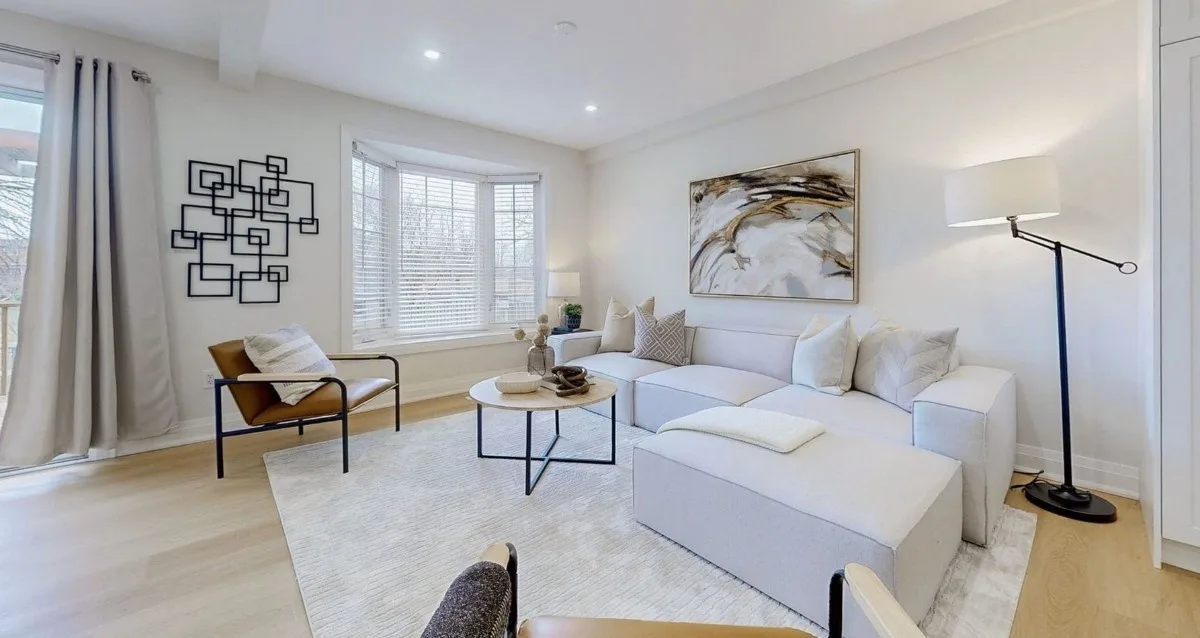
A buyer who walks into a living room holding a sectional, two recliners, a wall unit and thirty years of framed photos spends the visit looking at your belongings instead of the room. They cannot tell how much floor space there is, and they cannot picture their own furniture in it. In the homes we stage, taking half the furniture out of a room makes it feel noticeably bigger to almost everyone who walks through, even though the square footage never changed.
If you are downsizing, you are already doing the job agents ask sellers to do first. Among agents in the United States, decluttering is the most commonly recommended task before a home goes on the market, ahead of a full cleaning and ahead of curb appeal work. Those same agents report that staging shortens the time a home sits on the market. Of the agents surveyed, 29% saw buyers offer 1% to 10% more on a staged home than on a similar home that was not staged.

When to Start, and What Order to Do It In
Start sorting earlier than feels necessary. A house you have lived in for twenty or thirty years holds more than you think, and sorting it takes a long time because every object needs a decision from you.
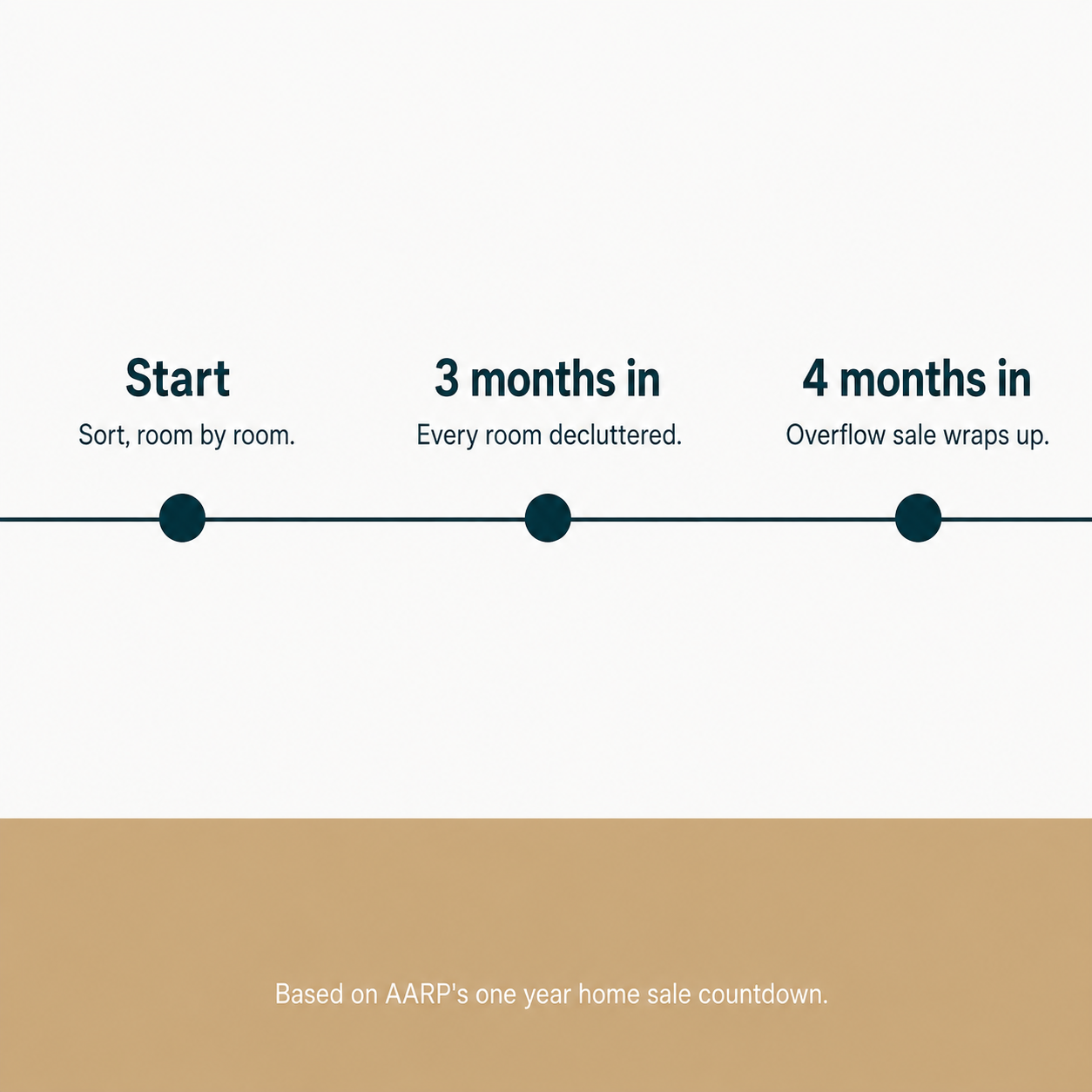
If you have a year before you want to list, AARP’s one-year countdown for home sellers lays out a schedule you can follow. Work through the house room by room, and aim to have every room decluttered within about three months of starting. Then give yourself roughly a month to sell the overflow on Facebook Marketplace or Nextdoor, since traditional garage sales rarely sell much of it.
If you have three months rather than a year, you will be making faster decisions, and you will need help with the physical work. That usually means family, or people you pay: an organizer, a junk removal crew, movers. Clearing the house is not something a stager does.
Either way you are aiming at the same result, and in practice, the target we use is about half. Take about half the contents out of the closets and the cupboards, and take each room down to the furniture that fits in it comfortably. A half empty closet shows a buyer that the house has more storage than the household needs, and a room with the right amount of furniture in it photographs bigger than the same room packed full.
Here is the sequence from first decision to listing photos.
- Sort, room by room. Start at least three months before you list, and a year ahead if you can. This step takes far more time than any of the others.
- Find out what stays before you haul anything. Some of the pieces you are planning to sell or donate are the ones a room will need for the photos. Have someone look at the house before any of the large furniture leaves.
- Move things out. Donation pickups, junk removal, curbside collection and the trips to the storage unit all happen at this stage. Book the pickups ahead of time, because appointment slots get taken well in advance.
- Handle the small repairs. Patch the wall where the bookcase was, touch up the paint, fix the drawer that sticks, replace the burnt out bulbs. Repairs come after the clearing because clearing is what shows you the damage.
- Deep clean. Clean the whole house once, thoroughly, after enough has left that you can reach everything.
- Stage. Installation for an occupied home is usually one day. Confirm the staging date as soon as you know your listing date. We run our own warehouse and logistics, so we can usually install within days of a confirmed booking. The clearing and the cleaning are what set your timeline, not our schedule.
- Photograph. Book the photographer for right after staging day, while every room is still exactly as it was set up.
How to Handle the Things That Are Hard to Let Go Of
This is a family home and the objects in it carry weight, so the sorting slows down or stops entirely at certain items. That is the normal experience of this job, not a sign you are doing it wrong. A few practical rules help you keep going, and none of them requires you to feel differently about any of it.
Start in a room with nothing personal in it. The linen closet, the kitchen cupboards and the garage shelves are good places to begin. The decisions there are easy, the space gets finished quickly, and having one room done makes the next one easier to start.
Photograph things before they go. The children’s artwork, the piano, the dining set that hosted every holiday. A photo keeps the memory of the piece, which is usually what you actually want to keep, and it takes up no space in the new place.
Give family a deadline. If your children want a piece, ask them to collect it by a specific date. Anything not picked up by then goes back into the sorting piles, and everyone knows that in advance.
Keep one undecided box, with a date on it. Anything you cannot decide about goes in, and you look again in two weeks. Keep it to the one box.
You do not have to do all of this in a single weekend, and it goes better when you do not try to.
How to Decide What Goes Where
Measure the new place first, before you decide anything else. A floor plan with real dimensions answers a lot of the questions for you. If the sofa does not fit, it is not coming, and that is one decision you do not have to agonize over.
Everything else falls into four piles: coming with you, worth selling, worth donating, and going out. Set a realistic expectation on the selling pile before you start. Most everyday household furniture, including large dark wood pieces, dressers, china and decorative figurines, does not resell for much, while mid century modern pieces, patio sets and unusual or branded items have a better chance. Plan your move as though the furniture money is not coming, and treat anything that does sell as a bonus.
The table below covers where each pile actually goes in Toronto and what it costs to get it there.
| What you are holding | Where it goes | What to know |
|---|---|---|
| Furniture in good, saleable condition | Habitat for Humanity GTA ReStore | Curbside pickup is free. In-home pickup from the main floor costs $150 for one to three items, $300 for four to seven, and $450 for eight or more. Book at least 10 days ahead. No mattresses, and no large hutches, entertainment units or desks over five feet long. |
| Sofas, tables, dressers, beds and gently used mattresses | Furniture Bank | Pickup starts at $150, which pays for the truck and two people. Drop-off at their warehouse is free on weekday mornings. They do not take major appliances, clothing or linens. |
| Clothing, books, kitchenware, small appliances and small electronics | Diabetes Canada home pickup | Doorstep pickup is free, per Diabetes Canada’s own materials. Items must be bagged or boxed and under 40 lbs. This program takes no furniture at all, which surprises a lot of people. |
| Housewares, décor, books and electronics you would rather drop off | Salvation Army Thrift Store | Drop-off only, with no home pickup anywhere in Canada. They do not accept furniture or mattresses. |
| Worn out furniture, mattresses, box springs, appliances and bed frames | City of Toronto oversized item collection | Set items at the curb beside your bin on your regular garbage day. No booking and no separate fee, since it is covered by the annual solid waste charge. Space items half a metre apart, tie sofa beds shut, and remove appliance doors. |
| Paint, solvents, cleaners, batteries, propane tanks and old bulbs | City of Toronto household hazardous waste | Free at the city’s drop-off depots, or book a free Toxic Taxi pickup through 311. Both are capped at 50 litres or kilograms per visit, so a big basement may take two rounds. Leftover medications go back to a pharmacy instead. |
| Old TVs, computers, monitors and printers | City of Toronto electronic waste | Free at city drop-off depots and at seasonal Community Environment Days. Check the depot page before you drive over, because not every depot takes electronics and the hours are narrower than the depot’s own. |
| Everything left, all at once | Junk removal | GTA companies price by how much truck space you fill, with published starting rates around $99 for a quarter truck and $449 for a full one. Those are minimum prices, and the company confirms the real one when they see the load. A house holding thirty years of belongings should expect a price well above those starting rates. |
Curb rules change from city to city, so check the rules where you live before you plan a clear-out weekend: Mississauga and Brampton work much like Toronto, while Richmond Hill requires an appointment and collects only appliances and metal goods.
What to Keep in Place for the Photos
Downsizing pushes you to clear everything, and a few things should stay right where they are until the house has been photographed. Staging an occupied home starts with the furniture you already own. We build each room around your pieces and add to them from our inventory, so a sofa you were planning to sell may turn out to be the piece the living room needs. This is the mistake that costs the most to fix, because a room that has been emptied out has to be furnished again from scratch.
The large pieces that fit the room. Keep the sofa, the bed, the dining table and a dresser that sits comfortably against the wall. Size matters more than age here. We regularly stage around furniture that is not new, styling the room to suit what is already there.
Everyday things in good condition that the room uses. Lamps, mirrors, area rugs, a bench by the door, and clean white bedding and towels all stay. Those are the items we bring in when a home does not have them, so if yours are in good shape, leave them out.
Anything big you were planning to sell or donate, until someone has looked at the house. Have someone assess the rooms before the large furniture leaves. Then sell after the listing photos are taken, or after the house sells.
The money you were thinking of putting into renovations. In our experience the pre-sale spending that does not pay off is new window coverings, partial repairs, a kitchen or bathroom remodel, finishing the basement, and elaborate landscaping. A house that is cleared, repaired, clean and staged does more for your photos than any of those.
Some things come down no matter what: family photos, collections, memorabilia and anything with your name on it. Those get packed away, and we replace them with neutral artwork and accessories.
What Has to Leave Before a Room Can Be Staged and Photographed
Most of what you would pack for the move is also what has to be gone before the photos, and staging asks for a little more on top of that. Clear the surfaces, including the kitchen and bathroom counters. Take the closets down to about half full. Family photos, awards and religious items come down too, so that a buyer walking through is looking at the house rather than at your family. That last one is the part people find hardest, and the photographs are being packed for the move anyway, so they go back up in the new place. Extra seating goes as well, along with any piece that was the right size when four people lived here and is too big for the room now.
The Living and Dining Rooms
These rooms usually hold one or two more pieces of furniture than actually fit. The wall unit, the second recliner, the extra armchair nobody sits in and the china cabinet are the usual candidates, and taking out even one of them shows more of the floor. In the dining room, pull the leaves out of the table and take the chairs down to the number the room fits comfortably. A table sized for holiday dinners makes the room look tight the rest of the year.
The Primary Bedroom
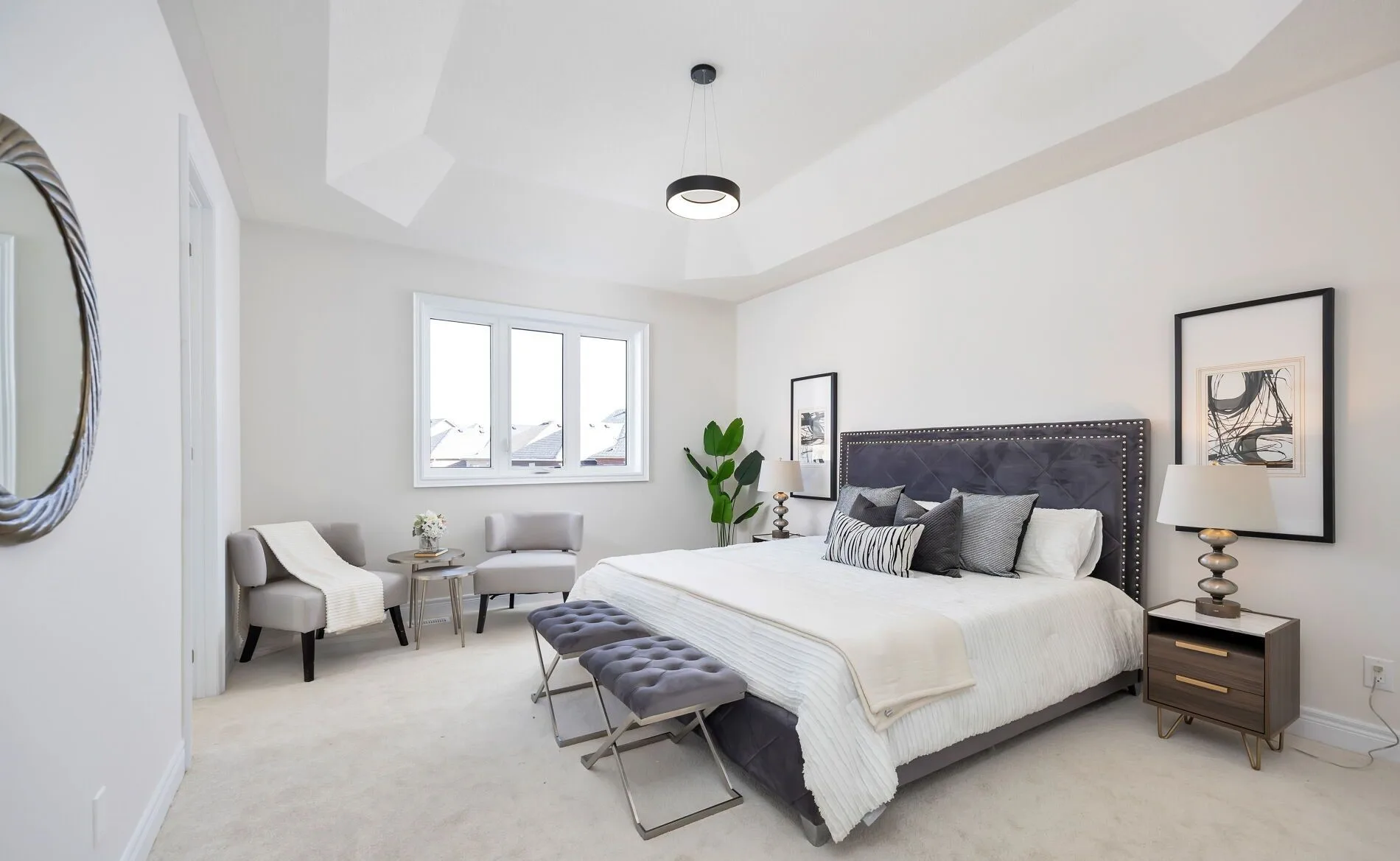
Clear the nightstands completely, including medications, papers and anything valuable, since strangers walk through this room. Exercise equipment leaves the bedroom, and so does the second dresser if the room feels crowded with both. Empty out about half the closet, because a closet packed to the rail tells a buyer that the storage in this house is not enough.
The Rooms the Kids Grew Up In
These are usually the hardest rooms to face and the ones that improve the most. Most of them stopped being bedrooms years ago and became storage, and a buyer who opens the door on stacked boxes cannot tell what the room is for. Give each one a single clear purpose again, either a bedroom or an office, and take everything else out. If your grown children still have belongings here, this is the moment to set a pickup date with them.
The Basement and the Garage
Buyers open these doors, so the basement cannot become the place where everything from upstairs went. Keep the floor visible, keep a clear walking path, and if things have to be stored here for now, use uniform boxes stacked neatly along one wall. The garage should show that a car fits in it, which often means the shelves and the workbench get thinned out too.
Where the Things You Are Keeping Go in the Meantime
You have three realistic options for the belongings that are coming with you but cannot stay in the house while it is listed.
Move them to the new place early. This is the best outcome for your listing photos, and it is only possible when you take possession of the new place before you list this one. It usually means paying movers for a second trip, and that cost is worth comparing against a few months of storage.
Rent a storage unit. A 10 by 10 unit in the GTA generally runs about $195 to $260 a month at standard rates, and that size holds a good portion of a house. Nearly every operator advertises a first month free or a half price introductory rate, and those offers end well before a downsizing move does. Budget with the standard rate instead.

Use the basement or the garage. This costs nothing, but whatever you put down there ends up in the listing photos. It only works if you keep the boxes stacked neatly along one wall and the floor clear.
One thing to plan around: we do not move or store client belongings. Our liability insurance does not cover homeowners’ possessions, so the house needs to be ready before our team arrives on staging day. Our team will sometimes help an older client shift something within the home, but the hauling, the storage unit and the movers are arrangements you make separately. Put all of that in your budget and your calendar early, so none of it is still outstanding on staging day.
What a Stager Does, and What You Have to Do Yourself
The division of labour is simple. You declutter, you move what you are keeping to storage, and you clean. We assess the house, tell you specifically what to change in each room, and then style it with your furniture plus pieces from our inventory.
Get that assessment early, because the list it gives you is what you sort against. For an occupied home you can send us photos and a video walkthrough and we will tell you what can stay and what needs to go, at no charge. An in-person consultation is $250 and takes one to two hours. You get a written room by room list of what to declutter, reorganize and address, and the fee comes off the staging cost if you go ahead with us. Either way, you find out which of your own things are the problem before you start hauling anything away.
Before staging day, you are responsible for three things: decluttering to that list, moving the things you are keeping to the basement, garage or storage, and completing a deep clean. The house has to be ready when our team arrives.
| Staging while you still live there | Staging after you have moved out | |
|---|---|---|
| Whose furniture | Yours stays in place, and we add artwork, mirrors, decorative accessories, greenery, cushions and select furniture | Everything comes from our inventory, since the rooms are empty |
| What you do first | Declutter to the list, move the keepers out, deep clean | Finish the move, then leave the house empty |
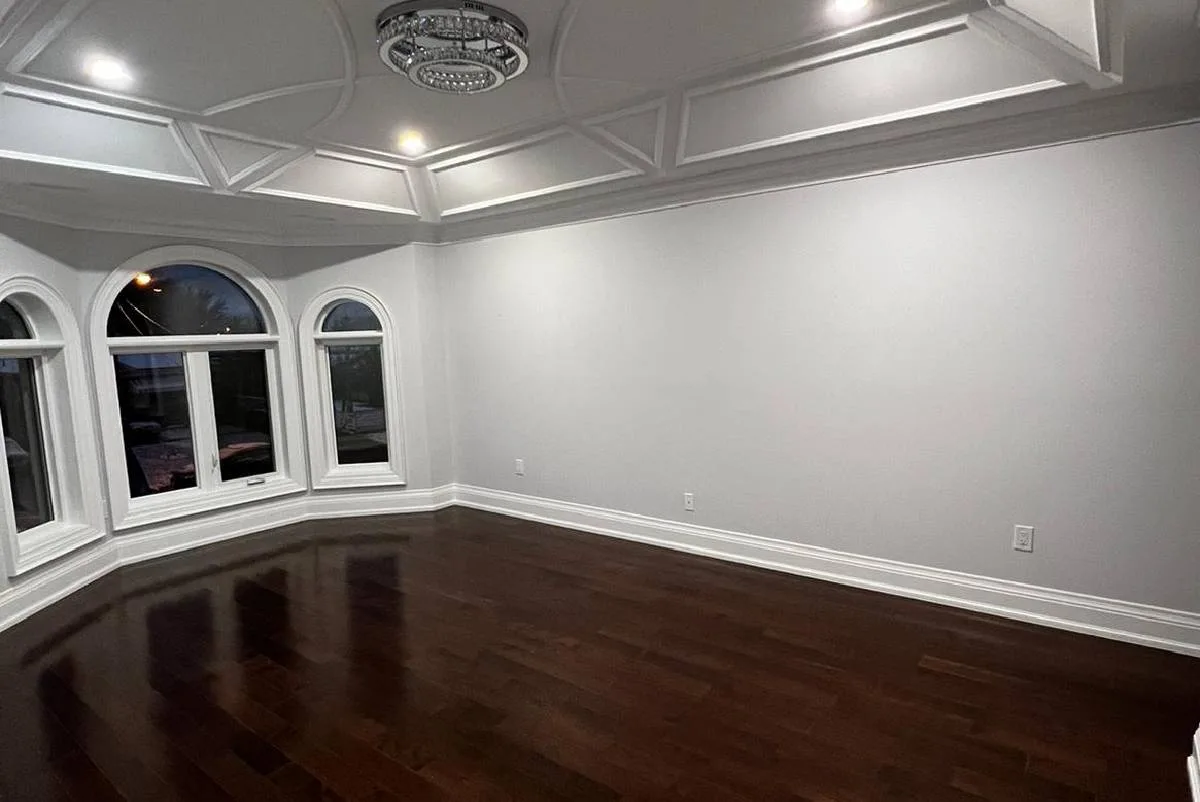
| What to watch for | Rooms drift back out of shape with everyday use | In our experience, empty rooms often look smaller than they are, and marks on floors and walls become what buyers notice |
If you are staying in the house until it sells, our guide to occupied home staging covers how that works day to day.
Before
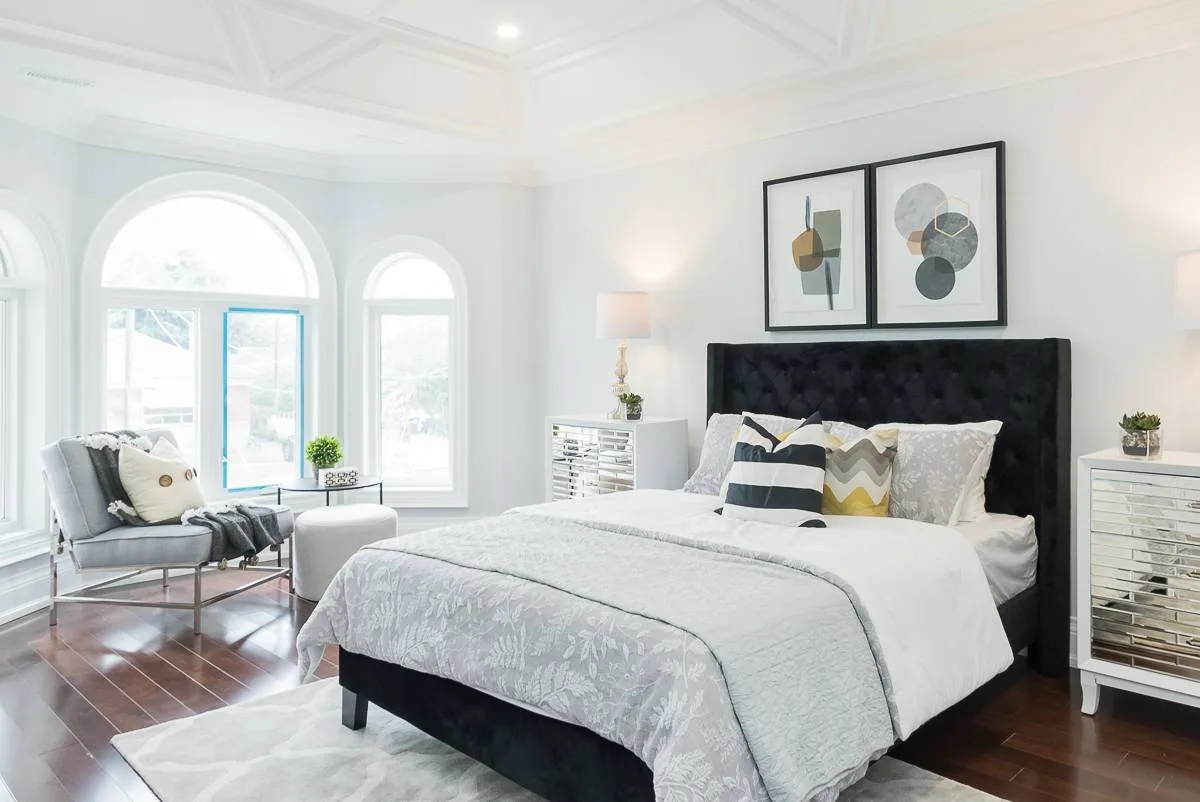
After
See more in our Before and After gallery
Where Staging Fits Among the Other Costs of Downsizing
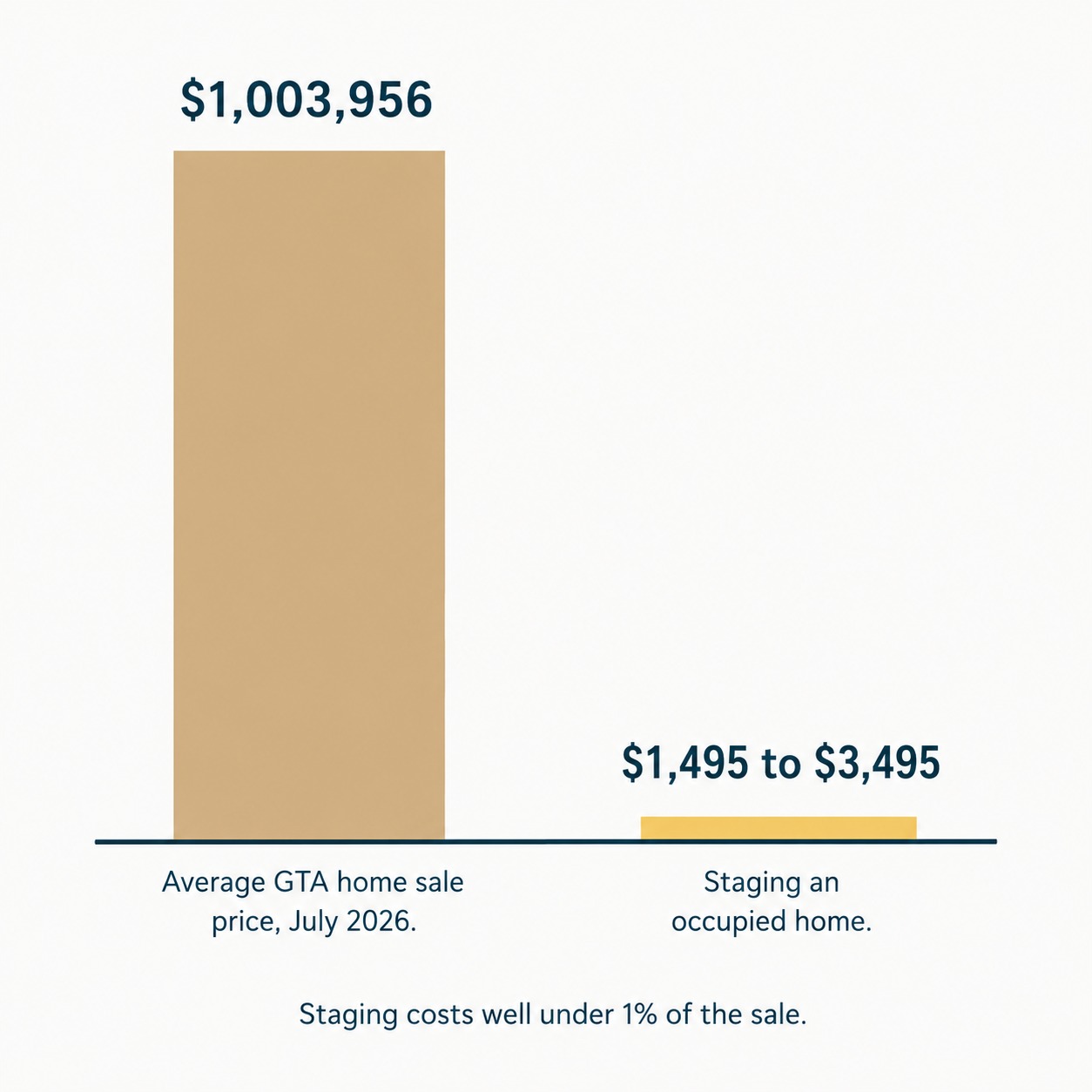
By the time you list, you are already paying for movers, probably junk removal, possibly a storage unit, and the closing costs on both ends. Staging is one more line item on that list. It is also the only one aimed at the price the house sells for, since the rest are the cost of moving your belongings and closing the deal. For a home you are still living in, where we work with your furniture and add to it, staging runs between $1,495 and $3,495 depending on the size of the home and how much we bring in. Put that next to the sale itself: the average GTA selling price was $1,003,956 in July 2026, so staging an occupied home costs well under one percent of what a typical GTA home sells for. Our full breakdown of home staging costs in Toronto covers what moves the staging number up or down.
Frequently Asked Questions
Should I declutter before or after the staging consultation?
Do both, in that order. Clear out the things you already know are leaving: the obvious junk, the expired food, the boxes nobody has opened in ten years. Then book the consultation before you start moving furniture or booking pickups. The consultation tells you which of your own pieces should stay in place for the photos, so you do not haul away something the room needed.
Should I sell my furniture before I list or after?
Sell anything you are certain is not coming with you and not needed for the staged rooms, and sell it before you list. Wait on the larger pieces until a stager has seen the house, because those are often the ones a room gets built around. Keep your expectations low on price: most ordinary household furniture sells for very little, and for many pieces the effort of arranging a sale is not repaid by the price.
Does an empty house show better than a full one?
No. In our experience, empty rooms usually look smaller than they are, and buyers start noticing scuffed baseboards and patched drywall because there is nothing else to look at. A house with too much furniture and a house with none both make it hard for a buyer to picture living there. The house that shows best is the one with the right amount of furniture in each room.
How long does the whole process take?
The sorting is the long part and it runs for months, not weeks. Once the house is cleared, repaired and cleaned, staging an occupied home takes about a day, and photos should be booked immediately after. After that, plan on keeping the house tidy and ready to show for a while. Homes in the GTA took an average of 45 days to sell in July 2026.
Ready to Find Out What Actually Needs to Go?
If you are standing in a full house wondering where to start, send us photos and a video walkthrough of your home. We will look at them and tell you, at no charge, what can stay and what needs to leave before the house is photographed. If you would rather have someone walk through it with you, our in-person consultation is $250 and comes off the staging fee if you decide to stage with us. Either way, you will finish the conversation knowing what has to go and what order to do it in, so you can start on the first room this week.