


Staging a condo in Toronto typically costs between $2,000 and $5,500 in 2026 if the unit is vacant, and between $1,495 and $3,495 if you are still living in it. A staging consultation on its own runs about $250. The number moves with how many rooms you are staging, whether the unit is empty or furnished, and how long you need the inventory in place.
At StyleBite Staging, we have staged over 1,000 properties across the GTA, and a large share of those are condos. We publish our condo pricing openly because most sellers get quotes with no explanation of what sits inside the number and what does not. This guide breaks down what condo staging costs, what drives it, and the three costs that surprise sellers most often: what happens when your unit needs the furniture past 30 days, what your building charges to let a staging crew in, and HST.
What Drives the Cost of Staging a Condo
Condo quotes vary because the work varies. These are the factors that move the number most:
- Vacant or occupied. A vacant unit needs a complete package: sofa, dining set, beds, rugs, lamps, art, and accessories. An occupied unit uses your furniture as the base and adds pieces on top. The volume of inventory we bring is the single largest cost driver.
- Number of rooms staged. Most condo projects cover the living area, the kitchen, the primary bedroom, and a den or second bedroom if there is one. Adding rooms adds cost.
- Unit size and layout. A 500 square foot studio and a 1,100 square foot two bedroom plus den are different jobs in furniture volume, labour, and installation time.
- How long you need it. Staging is an inventory rental with a term attached. A 30-day term and a 90-day term are not the same price.
- Building logistics. Elevator bookings, loading dock windows, and restricted moving hours add coordination and installation time compared with backing a truck up to a driveway.
Condo Staging Costs by Unit Type
Industry bodies like the Real Estate Staging Association and the National Association of Realtors track average staging spends, but none of them publish price tiers broken out by “one bedroom plus den.” That level of detail sits with individual staging companies. For reference, RESA tracked an average staging investment of $3,588 across the homes in its Q1 2025 market insights report, a reasonable benchmark for a full vacant installation in North America.
Here is how condo scope maps to cost within our own $2,000 to $5,500 range for vacant units:
| Unit type | Rooms typically staged | Where it usually lands |
|---|---|---|
| Studio | Combined living and sleeping area, kitchen | Lower end, starting at $2,000 |
| One bedroom | Living area, kitchen, bedroom | Lower to middle |
| One bedroom plus den | Living area, kitchen, bedroom, den styled as an office or nursery | Middle, near the RESA average |
| Two bedroom | Living area, kitchen, primary bedroom, second bedroom | Middle to upper |
| Two bedroom plus den | Living area, dining area, kitchen, two bedrooms, den | Upper end of the range |
Occupied condo staging runs $1,495 to $3,495 and follows the same logic, with the difference being how much of your own furniture we can work with. If your sofa and dining set photograph well, the project sits at the lower end. If most pieces need replacing, it moves up.
We quote after we see the unit, either in person or from photos and video you send us. Anyone quoting a condo sight unseen is guessing.
What Is Included in the Price
A complete quote should cover all of the following. If a proposal is silent on any of them, ask:
- The design plan for the unit, built around the layout and the buyer most likely to purchase it
- Inventory selection and pull from the warehouse
- Delivery to the building and coordination with property management
- Installation and styling
- The rental term for all furniture and accessories
- Removal and destaging once the unit sells
Vacant vs Occupied Condo Staging
| Vacant condo staging | Occupied condo staging | |
|---|---|---|
| Typical cost | $2,000 to $5,500 | $1,495 to $3,495 |
| What we supply | Everything: furniture, art, rugs, lamps, accessories | Supplementary pieces and accessories on top of your furniture |
| Best suited to | Empty units, investor-owned units, tenanted units after move-out | Units you are still living in through the listing period |
| Your prep work | Unit clean and empty | Declutter, depersonalize, deep clean, store excess furniture |
| Installation | One day | One day |
Vacant is the more common recommendation for condos. Empty rooms photograph badly, and buyers struggle to judge whether their own furniture fits a compact floor plan when there is nothing to scale against. A full package transforms the unit into a space a buyer can picture living in. You can read more about how each service works on our vacant staging and occupied staging pages.
Which Rooms to Stage First on a Tighter Budget
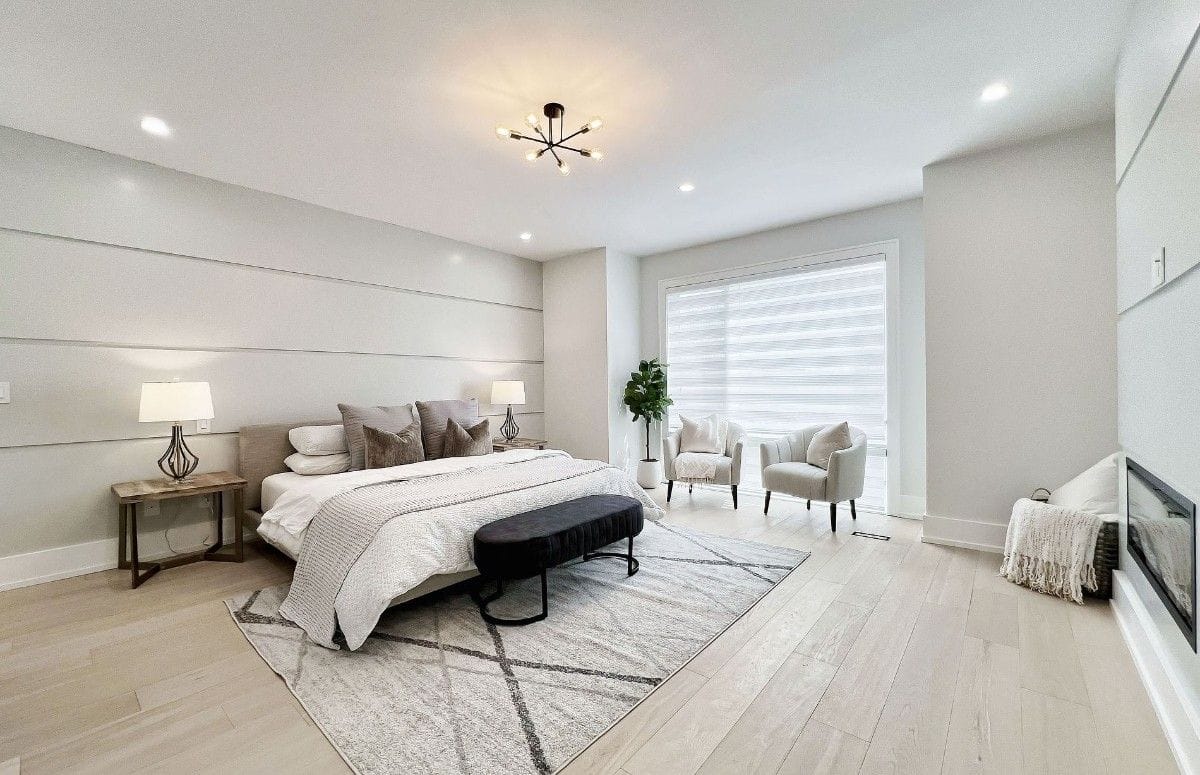
Partial staging is a legitimate option when the full package is out of reach. The question is which rooms earn the money. The NAR 2025 Profile of Home Staging found the living room is the most commonly staged room at 91%, followed by the primary bedroom at 83% and the dining room at 69%.
For a condo, that translates to staging the main living area first, the primary bedroom second, and the dining area third. A den or second bedroom left empty is far less damaging to your listing photos than an empty living room.
If your budget is tight enough that even partial staging is out of reach, a staging consultation at $250 gives you a room-by-room task list you can act on yourself. We credit that fee toward staging if you decide to move forward.
The 30-Day Term and What an Extension Costs
This is the line item sellers miss, and in 2026 it matters more than it used to.
Staging inventory is priced on a term, and 30 days is the industry standard. That worked when condos sold in a week. According to TRREB’s Q1 2026 condo market report, the average condo in the GTA now spends 43 days on market, up from 37 days a year earlier. A 30-day term on a 43-day average means most sellers will need an extension.
Extensions are usually priced as a share of your original contract. HomeGuide’s 2026 staging cost data puts the standard contract at 30 days, with each additional 30-day period costing another 10% to 30% of the initial contract fee. On a $3,000 condo staging contract, that is roughly $300 to $900 for every extra month your unit sits on the market.
Two things to do with this information:
- Ask what the initial term is before you compare prices. A quote with a 60-day term and a quote with a 30-day term are not comparable numbers, even if the dollar figures look close.
- Ask what an extension costs in writing. You want the monthly figure, not a promise to “work something out.”
We currently run a limited-time offer on our condo and home staging: if your listing does not sell within 30 days, you get two additional months of staging at no charge. In a market averaging 43 days, that removes the most likely surprise on the invoice. Details are on our condo staging page.
Building Charges Condo Sellers Forget to Budget
Staging a condo is treated by almost every building as a move, which triggers the building’s own rules and fees. The Condominium Authority of Ontario’s owners’ guide explains that condo boards can set binding rules covering things like elevator booking procedures and facility fees, and that buildings restrict the hours during which moving and maintenance can happen.
In practice, expect some combination of:
- A service elevator booking, usually requiring advance notice
- A move-in or move-out fee
- A refundable damage deposit held against the common elements
- A fixed loading dock window
- Quiet hours that limit when the crew can work
Amounts vary widely building to building, and there is no central registry that publishes averages for Toronto, so check your building’s rules or ask your property manager. These charges normally fall to you as the unit owner rather than to the staging company, because you hold the relationship with property management.
You can at least control who does the coordinating. We handle elevator bookings, dock access, and building move-in procedures with property management directly on every condo we stage. If a crew misses its elevator window, staging day does not happen, so this is worth asking any company about before you sign.
HST on Staging Services in Ontario
Staging is a taxable service. Ontario’s HST rate is 13%, and there is no exemption for home staging.
That matters when you compare proposals, because a pre-tax quote and a tax-inclusive quote can look like a $500 difference when they are actually the same price. A $4,000 staging package becomes $4,520 after HST. Ask every company whether the number they gave you includes tax.
Can You Deduct Staging Costs on an Investment Condo?
If you are selling an investment condo rather than your own home, staging may reduce your tax bill, and that changes what the service actually costs you.
The CRA allows sellers to deduct outlays and expenses incurred to sell a capital property from the proceeds of disposition when calculating a capital gain. The CRA’s list of these expenses includes fixing-up expenses and advertising costs alongside commissions and legal fees.
Whether your specific staging invoice qualifies is a question for your accountant, and we are not tax advisors. It is worth asking before you decide, because for an investor the deduction can meaningfully reduce the net cost of staging.
One caveat: if you are selling a principal residence that qualifies for the principal residence exemption, the gain is already tax free, so there is nothing for the deduction to reduce. The return on staging in that case comes entirely from the sale price and time on market.
What to Budget Before Staging Day
Staging works on a unit that is already clean and in good repair. Scuffed baseboards and a grimy balcony door read straight through a beautiful sofa. In NAR’s 2025 staging report, the improvements agents most commonly recommended to sellers were decluttering the home at 91% and cleaning the entire home at 88%.
For a condo specifically, budget for:
- A professional deep clean, including windows and balcony glass
- Paint touch-ups or a full neutral repaint if walls are marked or a bold colour
- Minor wall and trim repairs
- Off-site storage for furniture you are removing, since condos rarely have a basement or garage to absorb it
- Decluttering, which for a small unit means clearing everything from under the bed and off every surface
We do not publish benchmark prices for painters and cleaners because rates vary and we are not the ones quoting that work. Get two quotes on each and treat them as part of your staging budget rather than separate from it.
Removing personal items matters more in a condo than in a house. Photos, medications, and visible charging cables all read as clutter in a small room, and clutter is what makes a compact space look smaller in photographs.
Is Staging a Condo Worth It in Toronto’s 2026 Market?
Buyers have the leverage in the Toronto condo market right now, and that is exactly why presentation carries more weight than it did three years ago.
| Toronto condo market, Q1 2026 | Figure |
|---|---|
| Average GTA condo apartment price | $618,484, down 9.1% year over year |
| Average price, City of Toronto | $649,330 |
| Condo sales | 3,361 units, down 11.3% year over year |
| Active listings | 6,688 |
| Average days on market | 43, up from 37 in Q1 2025 |
Source: TRREB Q1 2026 Condo Market Report. Active listings are running at roughly double the quarter’s sales volume, the result of a large wave of new construction completing into a slower market.
Most of that inventory is concentrated in studios and one bedrooms with similar floor plans, often in the same handful of buildings. When five units in one building are competing for the same buyer, an unstaged unit has one lever left: price.
On the return side, we would rather give you the conservative numbers than the ones that circulate on staging websites. From the same NAR report:
- 83% of buyers’ agents said staging a home made it easier for a buyer to envision the property as their future home
- 49% of sellers’ agents observed that staging reduced the time homes spent on the market
- 29% of agents reported that staging led to a 1% to 10% increase in the dollar value offered
Apply the low end of that to the City of Toronto average condo price of $649,330 and a 1% to 5% lift is $6,493 to $32,466 on a project that costs a few thousand dollars.
The more practical argument in this market is about avoiding a price cut. A condo that sits for 43 days starts attracting lowball offers and pressure from your agent to reprice. A 3% reduction on a $649,000 condo is roughly $19,500, several times what it would have cost to stage the unit properly in the first place. You also carry the mortgage, property taxes, and maintenance fees for every one of those days, and maintenance fees are a cost condo sellers carry that house sellers do not.
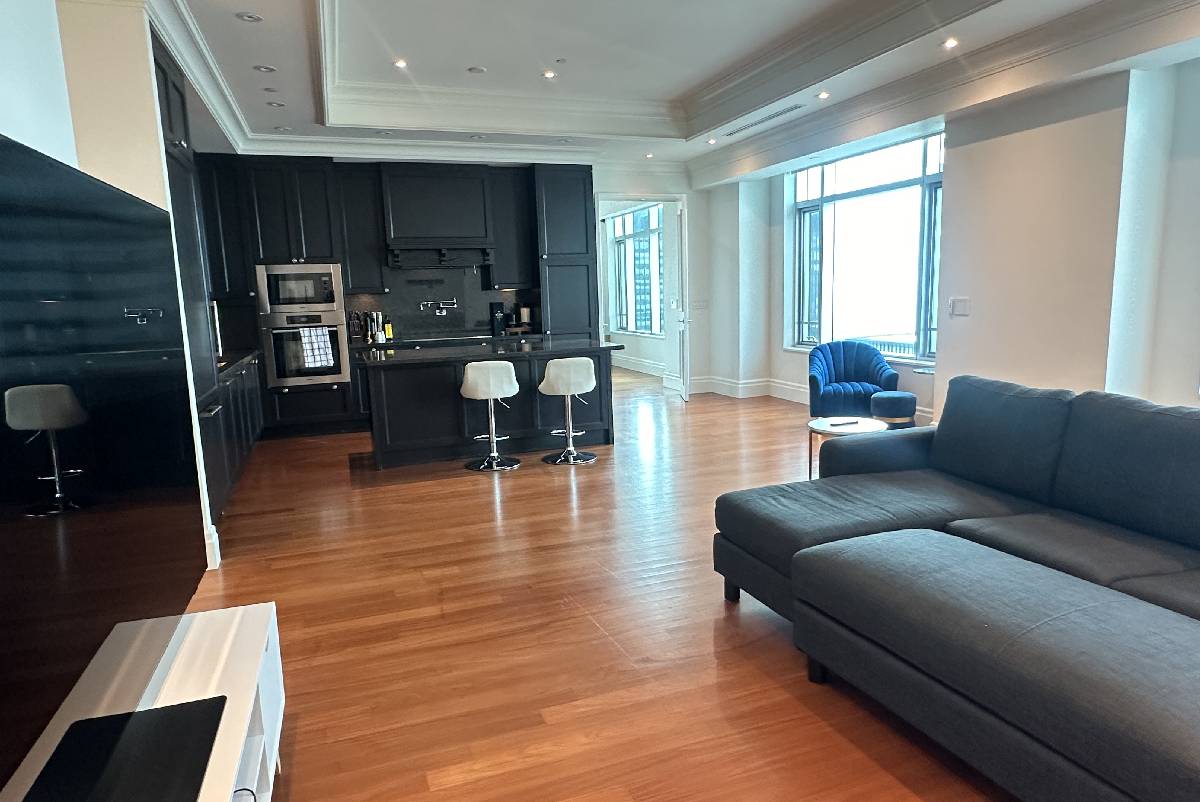
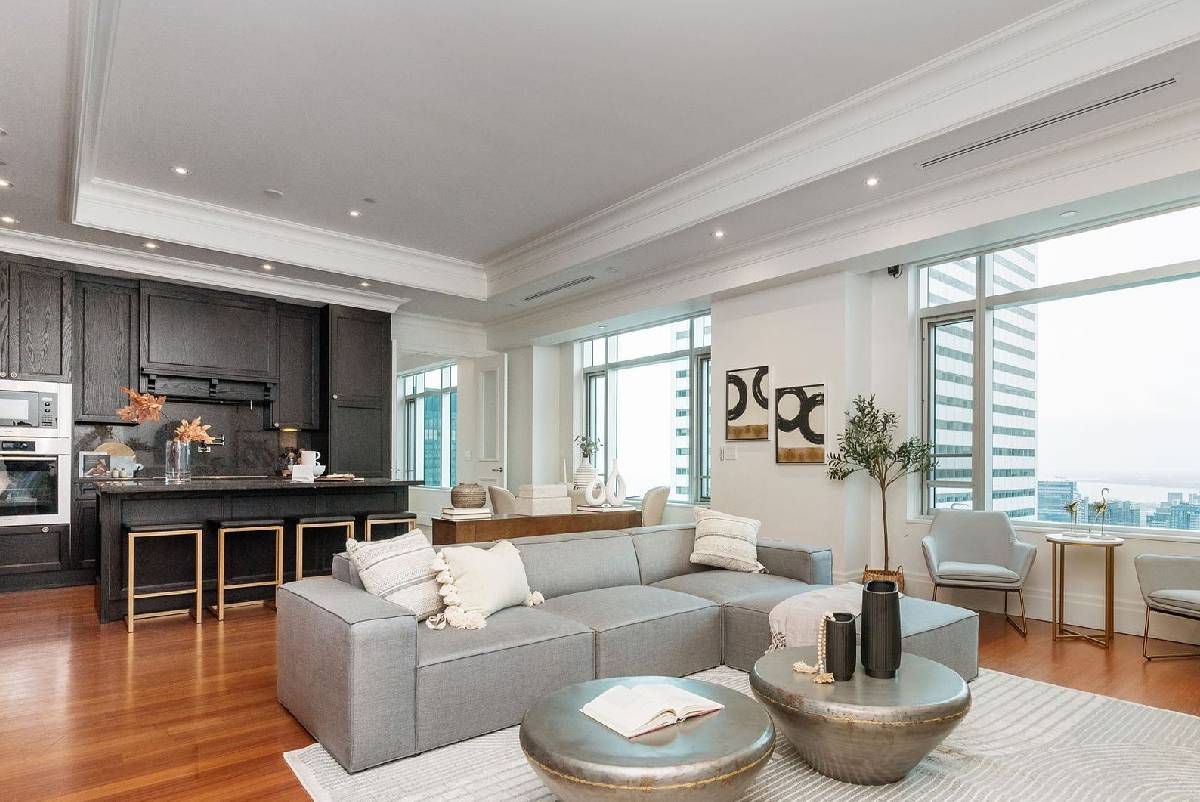
*Before and after of a downtown Toronto condo we staged. Same unit, same window wall.*
You can see more of this in our before and after gallery, and we go deeper on the numbers in our guide to whether professional staging is worth it in Toronto.
How to Compare Staging Quotes
The lowest quote often turns into the most expensive project. Here is what to compare beyond the headline number:
- Initial term length. Ask for it in writing. In a 43-day market, a longer initial term is worth real money.
- Extension cost per month. Get the figure before you sign, not after your listing hits day 31.
- Whether tax is included. A pre-tax quote looks 13% cheaper than it is.
- Owned or rented inventory. Companies that rent from third-party suppliers pass on the markup and depend on someone else’s availability for your staging date. We own everything in our 7,000 square foot warehouse, so we can hold a date through the spring and fall rush.
- Condo-scaled inventory. Standard-size furniture in a 600 square foot unit makes the unit look smaller, the opposite of what you paid for. Ask specifically whether they stock pieces dimensioned for condos.
- Who handles building logistics. If the answer is you, factor in your own time and the risk of a missed elevator window.
- Insurance on the inventory placed in your unit. Ask to see it.
- Credentials and track record. RESA runs an accreditation program for staging businesses with requirements covering insurance, business structure, and labour compliance, and designations like Certified Ultimate Stager indicate a company working to industry standards. We are a RESA member and hold the Certified Ultimate Stager designation, along with a 2025 Consumer Choice Award and more than 100 five-star Google reviews.
If you want costs across every service type rather than condos specifically, we cover those in our guide to home staging costs in Toronto.
Frequently Asked Questions About Condo Staging Costs
How much does it cost to stage a one bedroom condo in Toronto?
A vacant one bedroom condo generally sits at the lower to middle end of the $2,000 to $5,500 range, covering the living area, kitchen, and bedroom. If you are living in the unit, occupied staging starts at $1,495.
How much does it cost to stage a studio condo?
A studio is the least expensive condo to stage because there are fewer rooms to furnish. Vacant studio staging starts at $2,000 with us. The work concentrates on defining a sleeping zone and a living zone within one open space, a design problem more than a volume problem.
Does staging a condo cost more than staging a house?
Not usually. Condo staging starts at a similar price to vacant house staging because a full furniture package is still required, but condos need fewer rooms than most houses. The difference is logistics: elevator bookings, dock windows, and building rules add coordination that a driveway does not.
Who pays for condo staging, the seller or the agent?
The seller, in most cases. Agents used to absorb staging costs to win listings more often than they do now. Some agents still contribute or cover it on higher-value listings, so it is worth asking yours directly.
Is it worth staging a small condo?
Small units are where staging changes the photos most. An empty 550 square foot unit reads as cramped, and buyers cannot tell whether a bed will fit next to the window. Right-scale furniture answers that question in the listing photos, where the showing decision gets made.
What happens if my condo does not sell within 30 days?
Standard practice is a renewal fee for each additional month, commonly 10% to 30% of the original contract. Ask what that fee is before signing. Under our current limited-time offer, if your listing does not sell within 30 days you get two additional months at no charge.
Can I stage my condo myself for less?
You can, and a $250 consultation gives you the room-by-room plan to do it. The hard part to replicate is condo-scaled furniture. That is what makes a small room photograph well. Our FAQ page covers more on what is involved either way.
Get a Quote for Your Toronto Condo
Send us the details on your unit, including the size, the building, whether it is vacant or occupied, and your listing timeline, and we will have a proposal back to you within 24 hours. If your condo is occupied, you can send photos and video and we will give you a preliminary read on what stays and what needs to go before you commit to anything.
We stage condos across Toronto and the GTA, including Mississauga, Markham, Brampton, and Richmond Hill.
Contact us for a condo staging quote or call 647-930-9600.