

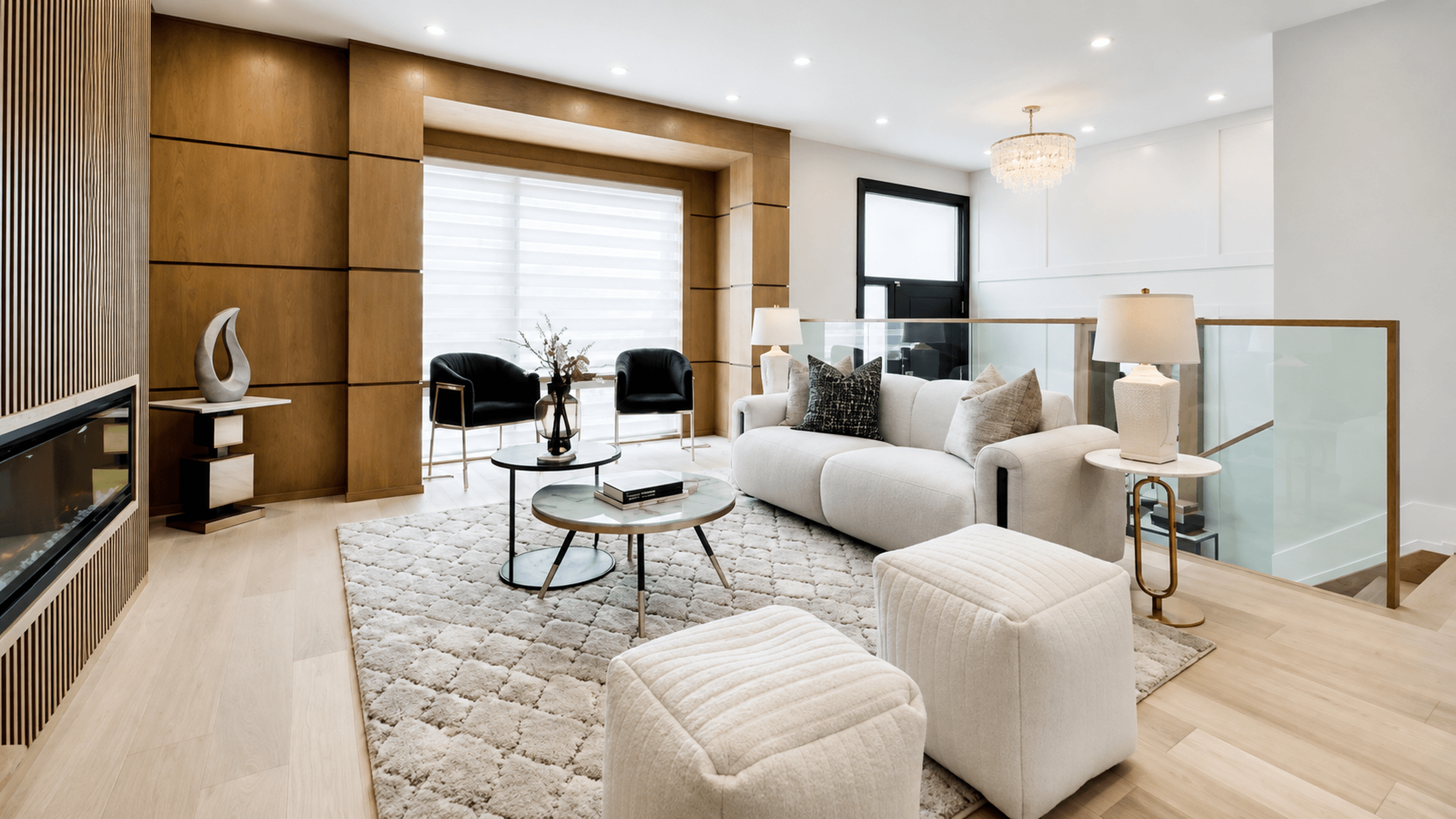
Staging does shorten the time a Toronto home spends on the market, but only when two things are true: the home is priced in line with similar homes selling nearby, and it is a property where buyers have trouble picturing how the space works. If a home is priced above what buyers are paying right now, staging will not rescue it. We would rather say that plainly than have you spend money on furniture expecting it to fix a pricing problem.
One thing is worth getting out of the way early. If you are looking for a precise number, how many days faster a staged Toronto home sells, that number does not exist. Nobody has measured staging against days on market in Canada. The most reliable figure available anywhere comes from an American survey of real estate agents, and we go through what it does and does not show below.
At StyleBite Staging, we staged a vacant five-bedroom home at 1443 Bunsden Avenue in Mississauga. It was listed at $2,950,000 and sold at $2,935,000 five days later. To put five days in context, the average home sold across the Toronto area in July 2026 spent 32 days on the market, and that number is up from a year ago. A result like that one is real, and it is also one property rather than an average. That difference matters, and most articles on this subject skip past it.
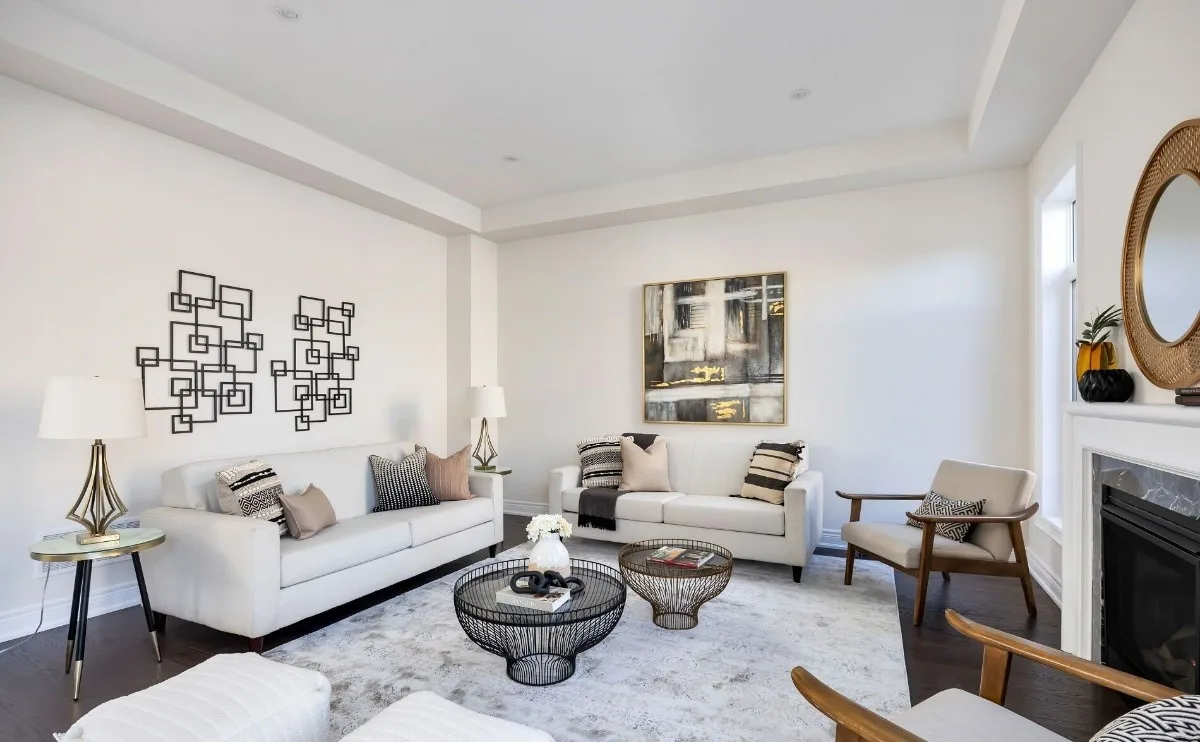
How long Toronto homes take to sell right now
The Toronto Regional Real Estate Board (TRREB) reported an average of 32 days on market for homes that sold in July 2026, compared with 30 days in July 2025. On a second, broader measure, the figure was 45 days, up from 40 a year earlier. Either way, homes are taking longer to sell than they did last summer.
That is happening even though sellers are facing fewer competing listings than they were a year ago. New listings fell 17.8% year over year, the number of homes for sale dropped to 26,098, and sales were nearly flat. The average selling price was $1,003,956, down 4.5%, and homes sold for 97% of their asking price on average.
TRREB described conditions as having tightened, with buyers facing more competition than a year ago. The days-on-market numbers still moved the wrong way for sellers. If the last time you sold a home it was gone in a week or two, that is not the market you are listing into now.
How long a home sits also depends a great deal on what kind of home it is (TRREB Market Watch, July 2026):
| Property type | Average days on market | Average price |
|---|---|---|
| Semi-detached | 25 | $964,922 |
| Townhouse (freehold) | 28 | $903,986 |
| Detached | 30 | $1,291,690 |
| Condo townhouse | 34 | $704,367 |
| Condo apartment | 40 | $636,323 |
Source: Toronto Regional Real Estate Board (TRREB)
There are two different “days on market” numbers, and they mean different things
TRREB publishes both, and sellers often hear one quoted as though it were the other.
The first counts the days the current listing was live before the home sold. The second counts the days the property was for sale, including an earlier listing if the same seller and the same brokerage relisted it partway through their original agreement.
In July 2026 those two numbers were 13 days apart, so it matters which one you are being handed when you estimate how long your own sale might take.
The second number is also narrower than it sounds. It only picks up relistings under the same seller and the same brokerage during the original agreement. A seller who switches brokerages, or who relists after the agreement runs out, starts the clock over on both. So both published figures can make a property look like it sold faster than it really did.
What the evidence actually says about staging and time on market
The most reliable neutral figure comes from the National Association of Realtors’ 2025 Profile of Home Staging. Almost half of the agents surveyed, 49%, said staging reduced the time their sellers’ homes spent on the market, with 30% seeing a slight drop and 19% seeing a significant one.
Two caveats belong right next to that number. It is American, and no Canadian equivalent exists. And it records what agents remember rather than what a study of completed sales measured.
The dramatic numbers you have probably already seen do not hold up at all. Figures like “86% of staged homes sell faster” and “staged homes sell 73% faster” turn up constantly on staging and real estate websites, and we went looking for where they came from. There is nothing behind either one.
The 73% figure traces back to a staging industry group’s own survey, built from projects that stagers chose to submit, with no unstaged homes to compare them against. The 86% figure looks like a garbled version of an agent-opinion number. Some websites credit one or both to the National Association of Realtors, which does not publish either one. We are not going to repeat statistics we cannot trace.
Here is the more interesting part. The evidence behind the speed claim is better than the evidence behind the price claim. The one published study that tested staging under controlled conditions, in the Journal of Housing Research in 2015, found that staging did not change what people said a property was worth. What it did change was how livable they found the home and how favourably they viewed it overall.
How quickly a buyer understands a home and how they feel about it are what move them to act, which is why the case for staging saving time stands on firmer ground than the case for staging raising the price.
One more thing worth saying. A seller who stages has usually also cleaned, decluttered, painted, made repairs, hired a professional photographer and priced more carefully. Staging tends to get credit for the whole package.
Why staged listings move faster
The speed benefit starts before anyone walks through your front door. Buyers sort through listings online first, and a home that photographs poorly often never gets a showing booked at all.
The National Association of Realtors survey follows that step through to the showing. Among agents representing buyers, 83% said staging made it easier for their clients to picture the property as their future home, and 73% said having photos in a listing was highly important to those clients. Most usefully for this question, 31% said staging made buyers more willing to walk through a home they had first seen online.
Showings in the first two weeks are what produce early offers, so anything that gets more buyers through the door in that window shortens the listing period.
Empty rooms work against you during that first look. Across more than 1,000 homes, the pattern we see is consistent. Buyers read an empty room as smaller than it is. They cannot tell whether their own sofa or bed would fit. And small flaws that furniture would pull attention away from become the thing they remember.
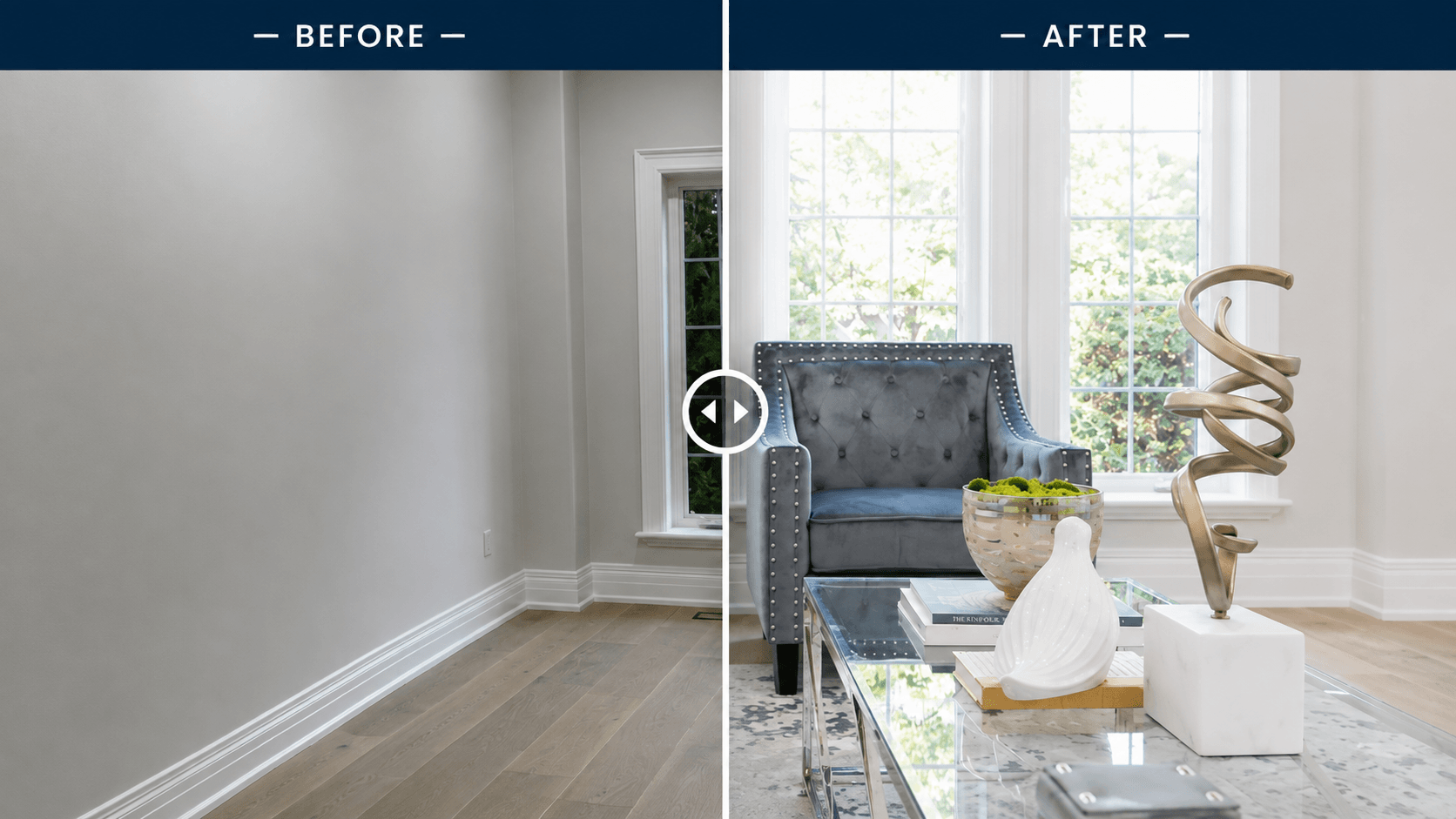
Furniture gives a buyer the reference points to judge size and function in a few seconds instead of guessing at them. You can see the difference across our before and after gallery.
What a faster sale actually saves you in Toronto
Days are easier to weigh once you put them into dollars. The figures below use the July 2026 Toronto-area average selling price of $1,003,956 and a mortgage covering 80% of it ($803,165) over 25 years at 4.34%, which is the average rate on new five-year fixed mortgages without insurance, as reported by the Bank of Canada. Property tax comes from the City of Toronto’s 2026 average residential bill of $5,311.
| What it costs to hold the home | Per month | Per day |
|---|---|---|
| Mortgage payment plus property tax (what leaves your account) | $4,817 | $158 |
| Interest plus property tax (what you never get back) | $3,322 | $109 |
These figures cover the mortgage and property tax only. They leave out utilities, home insurance and maintenance, which is why you will see higher monthly figures quoted elsewhere. Add your own utility, insurance and upkeep costs to get your real number.
Both figures above are useful, and they answer different questions. The full payment is what actually leaves your account each month. Only the interest part is money you lose, because the rest goes toward paying down your mortgage and stays yours either way.
Translated into time saved:
| If your sale comes | Payments you avoid | Money you never get back |
|---|---|---|
| 10 days sooner | $1,584 | $1,092 |
| 14 days sooner | $2,217 | $1,529 |
| 30 days sooner | $4,751 | $3,276 |
There is a second cost to sitting, and it is usually the bigger one. Toronto-area homes sold for 97% of asking on average in July 2026, which works out to roughly $30,000 under asking on a $1 million home.
That is where prices landed in the end, not a measured record of price cuts, and no Canadian real estate board publishes how often sellers drop their price partway through a listing. What we see is that listings which sit tend to get reduced, and a single reduction on a home in that range costs several times what staging does.
If you want the price side of the argument rather than the time side, we covered it in is professional home staging worth it in Toronto in 2026, and current pricing is in how much does home staging cost in Toronto.
Does staging help condos sell faster in Toronto?
Yes, and condo sellers have the most days available to save. Condo apartments sit longer than any other kind of property in the Toronto area, which is where presentation has the most work to do.
In July 2026, condo apartments averaged 40 days on market against 30 for detached homes. That is a third longer, in the same month, measured the same way. Condo apartment prices also fell faster than any other type of home, down 7.35% from a year earlier.
The supply picture explains why. Against 1,564 condo apartment sales in July, there were 4,190 new listings and 8,352 units already for sale. A condo buyer is choosing between dozens of units with similar layouts, similar square footage and similar finishes, often in the same building. When units are that close to interchangeable, the listing photos decide which ones get a showing.
A Toronto-area agent we work with had a condo that sat for roughly eight months with no offers. We staged it, and it sold a week later. She told us afterward that the fit was what made the difference. The unit was an older condo, and we matched the furniture to its style rather than dropping a standard staging look into it.
Two things matter more in a condo than they do in a house. The first is scale. Standard-sized sofas and beds make a 600 square foot unit feel cramped, so we keep furniture sized specifically for condo living.
The second is light. Plenty of Toronto units face north, sit in the shadow of another tower, or have interior rooms with no window at all, and lamp placement, mirrors and lighter finishes are what keep those rooms from photographing flat. Our condo staging service page covers how we handle both, along with booking the elevator and loading dock.
A condo looks cheaper to hold per day than a house, though less so than the arithmetic first suggests. A mortgage on 80% of the average condo apartment price runs about $2,772 a month, or roughly $91 a day. That leaves out your maintenance fee, property tax and unit insurance, because fees vary too much between buildings for any published figure to mean much. Add your own fee to that number before deciding what an extra month is worth.
Vacant homes are where buyers struggle most
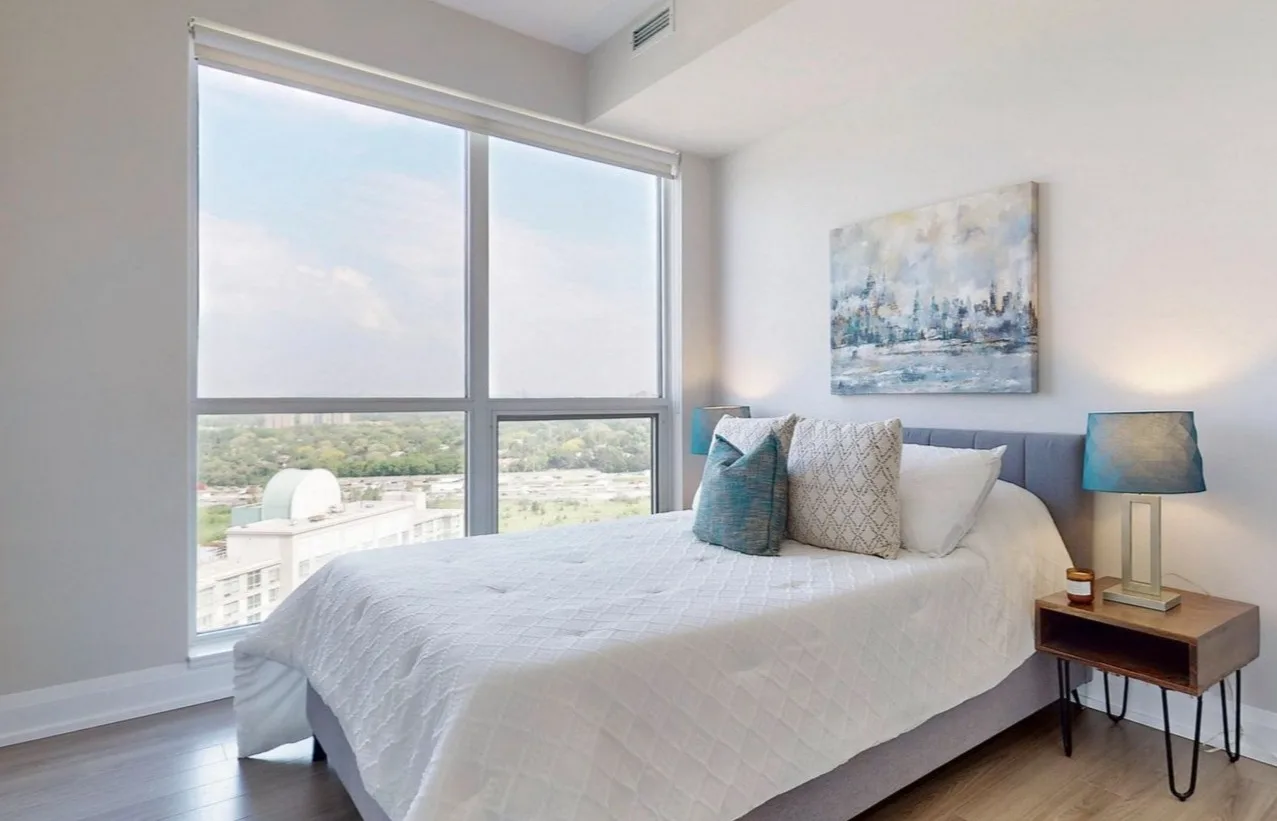
An empty house leaves the buyer to do all the work. They have to imagine where a bed goes, whether a sectional fits, what the third bedroom is even for. Most buyers find that difficult. The room feels smaller than it is, the flaws stand out more, and the listing photos give someone scrolling through dozens of them no reason to stop.
This is the situation where staging does the most work, and it is why our vacant home staging is the most involved service we offer. We supply everything: furniture, artwork, rugs, lighting and accessories, chosen to suit the home’s architecture and the buyer most likely to want it. Modern furniture in a traditional home clashes with the architecture, and buyers feel that even when they cannot say why. The goal is to transform an empty property into a home buyers can picture themselves living in.
One practical note about timing. We own our furniture rather than renting it from a third party, and we keep it in a 7,000 square foot warehouse with enough inventory for about 50 homes at once, so we are not waiting on availability to book your install. Most installs are finished in a single day.
Staging while you still live in the home
Occupied staging works, and it does not require moving out. We staged a home where the owners were still living in it, using their existing furniture along with our pieces and accessories. It received 16 offers and sold in four days.
The one thing that changes the timeline here is preparation. Before we arrive, the home needs to be decluttered and deep cleaned, with the items we flag moved to a basement, garage or storage.
Sellers who finish that quickly get staged quickly. Sellers who put it off add days to the front of the process, which costs them the very time staging is meant to save. Our occupied home staging page walks through what we ask for and what we handle.
When staging will not help your home sell faster
An overpriced listing is the clearest case
If your home is overpriced, staging will not fix it. Price governs how long a listing takes to sell, and no amount of presentation overrides it.
A study of Greater Toronto Area listings published in the Journal of Transport and Land Use found that the higher the asking price, the longer a listing sat, and the more likely it was to come off the market without selling at all. That study did not test staging, so it cannot show that staging fails on overpriced homes. What it does show is that price on its own changes how long you wait and whether you sell.
Getting the price right is a prerequisite for staging, not something staging can replace. If your home is priced above what comparable homes are selling for, fix that first. Staging an overpriced listing gets you better photographs of a home buyers still are not going to offer on.
Four other situations where we would tell you to save your money:
| Situation | What to do instead |
|---|---|
| The property is being sold to builders, renovators or investors | These buyers are looking at land value, what can be built and the numbers. Put the money into a clean site, accurate measurements and clear documentation of what is possible. |
| The home has condition problems buyers will find | Handle the repair. In the National Association of Realtors 2025 survey, 51% of sellers’ agents said they do not stage but do tell sellers to declutter and fix faults. A staged room has the same failing roof once the inspection happens. |
| The unit is tenanted and access or cooperation is limited | Work out showing access and tenant cooperation before you list. If neither is realistic, price for the constraint rather than paying to stage a property nobody can properly see. |
| Correctly priced homes in the area are already selling in a handful of days | There are only so many days available to save. This is not most of the Toronto area right now, but it does happen in specific pockets and price ranges. |
If you are not sure which of these describes your property, a staging consultation is the cheaper way to find out. We walk the home, tell you what is worth doing, and the fee comes off your staging cost if you go ahead.
Should agents recommend staging to a seller?
When a seller pushes back on the cost, the argument that usually moves them is the arithmetic of waiting.
Three numbers do most of the work in that conversation:
Waiting costs about $158 a day on a Toronto-area home at the average price, and roughly $109 of that is money the seller never gets back. Two weeks is $2,217 out of pocket.
The first price reduction costs far more than staging does. At 97% of asking, the average Toronto-area home is settling about $30,000 below list, and a seller who has already decided to cut the price is comparing that to a staging fee that is a small fraction of it.
A condo listing starts from a longer clock. Condo apartments are averaging 40 days against 30 for detached homes, so a condo seller has more days available to save in the first place.
The practical constraint for an agent is usually scheduling. We own our furniture, so we can normally install within days of confirmation instead of waiting on a rental supplier. Your client hears from us at each step: when we leave the warehouse, when we arrive, and when the install is finished. We send photos and video of the finished result that you can use for marketing right away.
For sellers who will not commit to a full stage, the consultation is a reasonable middle position. It gets them a walkthrough, a decluttering plan and a furniture layout, and it keeps the conversation open.
Our 30-day sold guarantee
Against a market averaging 32 days on the first measure and 45 on the second, 30 days is a meaningful standard to hold ourselves to. If a property we stage does not sell within 30 days, the client gets two additional months of staging at no extra charge. Details are on our sold guarantee page.
We are careful about how we describe this. A guarantee is a promise we make, and it proves nothing about how staging performs across the market. What it does is move the risk sellers worry about most onto us: paying for staging and then watching the listing sit anyway.
Common questions about staging and time on market in Toronto
How many days faster do staged homes sell in Toronto?
Nobody has measured this in Toronto, or anywhere in Canada. The most reliable number available is from the National Association of Realtors 2025 survey of American agents, where 49% of sellers’ agents said staging reduced time on market. Anyone quoting you a precise Canadian figure is quoting something that does not exist.
Does staging help condos sell faster?
Condo apartments spend the longest on the market of any Toronto-area property type, averaging 40 days in July 2026 against 30 for detached homes, and condo buyers are choosing among many near-identical units. Presentation carries more weight in that comparison than it does for a detached home with a distinctive layout.
How long does staging take to install?
Most vacant and occupied installs are finished in a single day. What varies is the lead time before that day, which depends on scheduling and, for occupied homes, on how quickly the seller finishes decluttering and cleaning.
Does staging work in a slow market?
Presentation matters more when the market is slow. When buyers have plenty of choice, more listings get ruled out while people are still scrolling, and a home that photographs poorly rarely gets the showing. The one condition that does not change is pricing.
Is staging worth it if the home is already furnished?
Often, yes, though the service is different. Occupied staging uses what you already own where it works, edits what does not, and adds pieces and accessories from our inventory. The furniture that makes a home comfortable to live in is rarely the furniture that photographs best or shows a room’s proportions clearly.
Should I stage before or after the listing photos are taken?
Before, without exception. The photographs are what determine whether a buyer books a showing, so the home needs to be finished before the photographer arrives.
Tell us about your listing
If you are weighing a listing right now and want to know whether staging would actually shorten your time on market, tell us about the property and we will give you a straight answer, including if the answer is that your property is not one where staging changes much.
We have staged more than 1,000 homes across the Toronto area, we hold the Certified Ultimate Stager designation, we are members of the Real Estate Staging Association, and we were named a Consumer Choice Award winner for home staging in Toronto Central in 2025. That history is why we have a reasonable sense of which properties benefit from staging and which ones do not.
If you are not ready for a full stage, start with a consultation instead. We walk the home, give you a prioritized list of what to do with what you already own, and put the fee toward your staging if you decide to go ahead.