

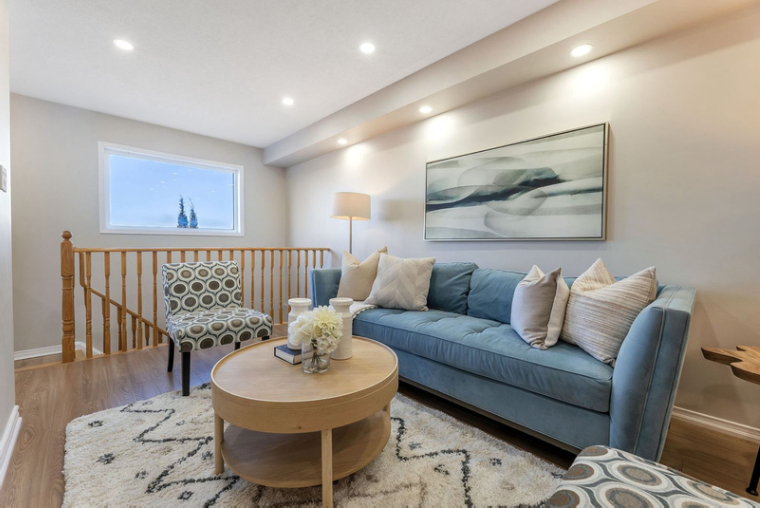
Occupied home staging prepares a home for sale while the owner is still living in it. Rather than furnishing an empty property from scratch, an occupied stager works with the homeowner’s existing furniture and supplements it with professional decor and accessories to create a polished, market-ready look. For Toronto sellers who can’t or don’t want to move out before listing, it’s often the most practical and cost-effective path to a competitive presentation.
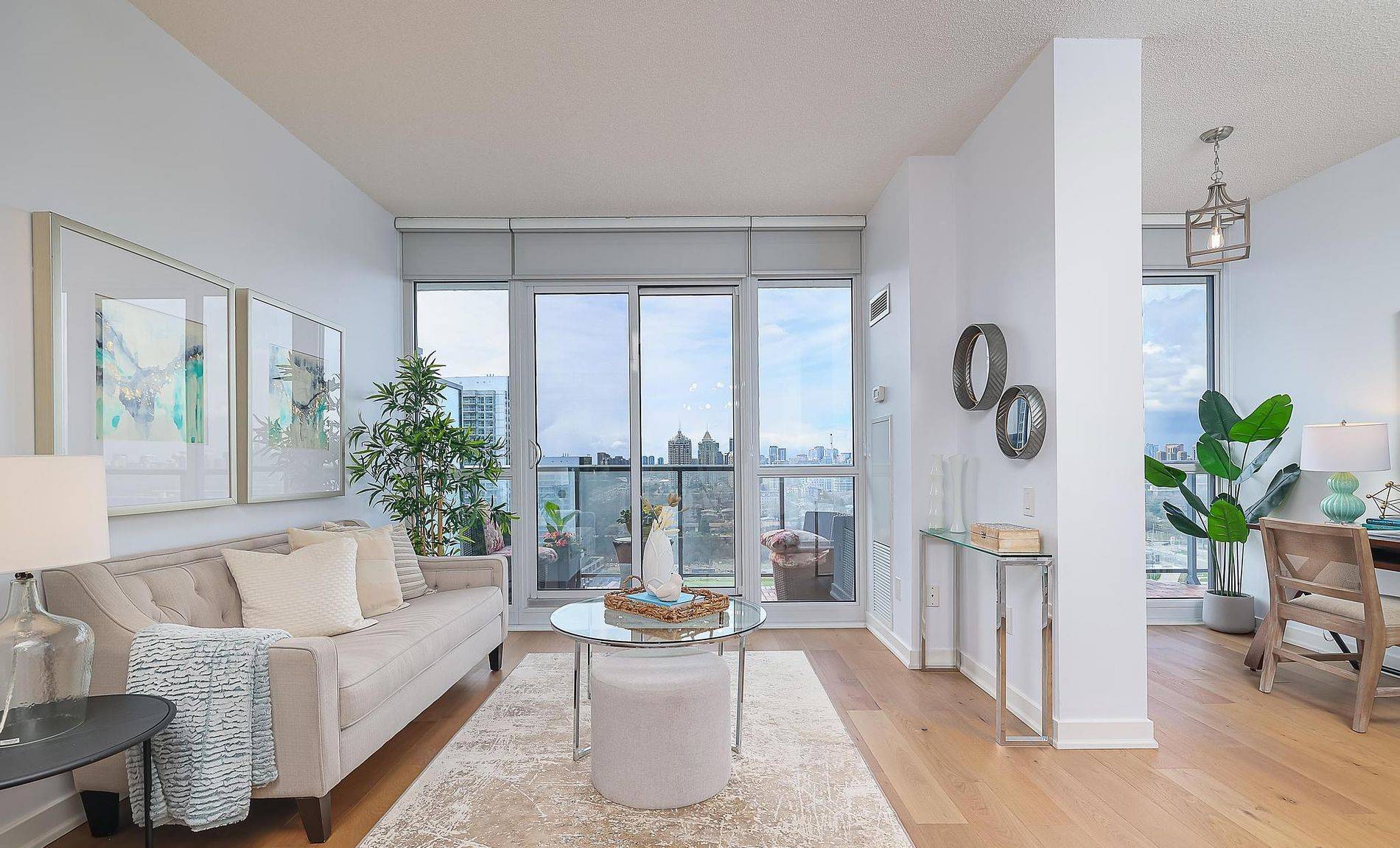
Toronto-based StyleBite Staging has staged more than 1,000 homes across the GTA, with occupied staging making up a significant portion of that work. The results hold up across the industry: staged homes consistently sell faster and attract stronger offers than unstaged ones.
This guide covers what occupied staging costs in 2026, how the process works, and what kind of return sellers can realistically expect.
What Is Occupied Home Staging?
Occupied staging is the process of preparing a lived-in home for sale without requiring the seller to vacate. A professional stager evaluates each room, determines which existing pieces to keep, rearrange, or remove, and brings in supplementary items (artwork, pillows, plants, mirrors, select furniture) to complete the presentation.
The goal isn’t to redecorate the home. It’s to edit and style it so that buyers, not the current owners, can picture themselves living there. That distinction matters more than most sellers expect.
How Does Occupied Staging Differ from Vacant Staging?
The core difference is what the stager is working with. Occupied staging uses the seller’s existing furnishings as a foundation. Vacant staging starts from an empty property and furnishes every room from scratch.
| Feature | Occupied Staging | Vacant Staging |
|---|---|---|
| Best suited for | Owner-occupied homes | Empty homes, new builds |
| Furniture source | Homeowner’s existing pieces plus stager supplements | Entirely from stager inventory |
| Typical Toronto cost | $1,495 to $3,495 | Starting at $2,000 |
| Seller stays in home? | Yes | Usually not required |
| Preparation required | Decluttering, deep clean, reorganizing | Property just needs to be clean |
Both approaches produce strong results. The right choice depends on the situation. For sellers still living in the home, occupied staging is almost always the right call.
How Much Does Occupied Staging Cost in Toronto?
Here’s what occupied staging services typically cost in the Toronto market, based on StyleBite’s published service rates:
| Service | Typical Cost |
|---|---|
| Staging consultation (1 to 2 hrs) | $250 (credited toward staging if the seller proceeds) |
| Occupied staging | $1,495 to $3,495 |
| Vacant staging | Starting at $2,000 |
| Condo staging | Starting at $2,000 |
The cost of occupied staging varies based on home size and how much supplementary inventory is needed. Most packages include a one-month rental period for items the stager brings in.
One thing worth considering when evaluating staging costs: the carrying costs of a Toronto home. The Toronto Regional Real Estate Board (TRREB) reports that the 2025 annual average selling price across the GTA was $1,067,968. At that price point, monthly costs (mortgage, maintenance, utilities) typically run $4,000 to $5,000 or more. Even shaving two weeks off time on the market can offset the staging investment before factoring in any increase in sale price.
Does Occupied Staging Actually Work?
The data is consistent across multiple industry sources:
- 83% of buyers’ agents say staging makes it easier for a buyer to visualize a property as their future home, according to the National Association of Realtors’ 2025 Profile of Home Staging.
- 49% of sellers’ agents in the same NAR report observed that staging reduced a home’s time on market.
- Nearly 30% of agents reported that staging their sellers’ homes led to a 1% to 10% increase in the dollar value offered.
- Sellers working with RESA members in Q1 2025 saw an average return of $23.34 for every $1 spent on professional staging, according to the Real Estate Staging Association’s Q1 2025 Market Insights.
For context: a 1-5% price increase on a $700,000 Toronto property equals $7,000 to $35,000. Most occupied staging packages cost well under $3,500. The math is straightforward.
StyleBite has documented this pattern in its own work. One recent occupied staging case received 16 offers and sold in four days on the market:
The Toronto Market in 2026: Why Presentation Matters More Now
Toronto’s housing market has been stabilizing, but buyers have more leverage than they did in peak years. TRREB reported 62,433 GTA home sales in 2025 against 186,753 new listings, the result of inventory rising faster than demand.
The condo segment has been particularly competitive. By March 2026, average GTA condo prices were down 9% year-over-year. In a market like this, a property that doesn’t photograph well or feel move-in ready gets overlooked. Buyers have plenty of alternatives.
Staging doesn’t change the fundamentals of a property. It changes how buyers perceive it, and perception drives offers.
It’s also worth noting that a strong majority of buyers begin their home search online. The listing photos are the first showing. If those images don’t capture attention, many buyers never schedule an in-person visit at all.
How the Occupied Staging Process Works
Here’s what sellers can expect when working with a professional stager on an occupied property.
Step 1: Initial Assessment
Sellers can start with either an in-person consultation ($250, credited toward staging fees if they proceed) or, in StyleBite’s case, a complimentary remote assessment. For the remote option, the seller sends photos and videos of the home and receives preliminary feedback on what works, what needs to be addressed, and what the staging scope might look like.
Step 2: Decluttering and Preparation
Before staging day, the seller receives a detailed list of what needs to happen: which rooms to declutter, what personal items to pack away, and what deep cleaning is required. Family photos, collections, and heavily personalized decor come down. The goal is to create a neutral canvas that helps buyers picture themselves in the space, not feel like they’re walking through someone else’s home.
This is often the most work for the homeowner, but it’s also one of the highest-impact steps. Rooms that feel large and clean in person photograph dramatically better.
Step 3: Staging Day
On staging day, the team arrives with supplementary inventory: artwork, throw pillows, plants, mirrors, rugs, decorative accessories, and select furniture pieces where needed. They style each space to create a cohesive presentation that photographs well and makes a strong impression during showings.
StyleBite’s designers, Rana and Angana, focus exclusively on styling and design. Every piece is chosen to complement the home’s existing character, not clash with it. Modern furniture in a traditional-style home creates visual tension that makes buyers uncomfortable, even if they can’t pinpoint why.
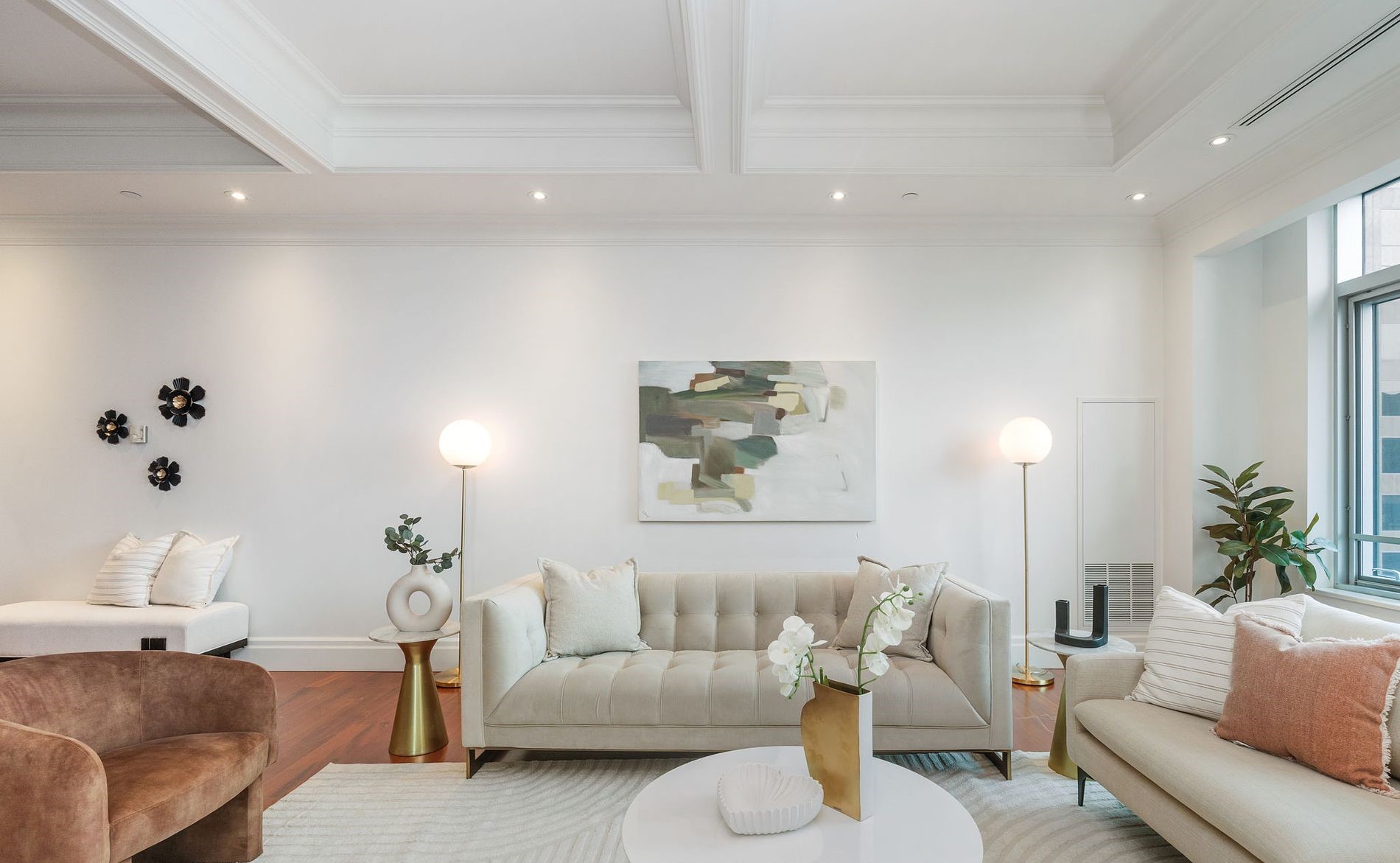
Here’s what that process looks like on a real StyleBite project:
Step 4: Maintaining the Look
Once staging is complete, the home stays staged for the duration of the listing. Stagers typically recommend photographing each styled area (how cushions are arranged, how the bed is made, where accessories are positioned) so the homeowner has a reference for resetting rooms after daily use. Showings can be requested on short notice, and the home needs to look its best every time.
Step 5: Destaging
After the property sells, the stager schedules a destaging appointment to retrieve their inventory. This typically takes 2-4 hours, depending on property size.
What Does a Stager Actually Bring In?
For occupied staging, the supplementary items a stager brings in typically include:
- Artwork
- Throw pillows and cushions
- Plants and greenery
- Mirrors
- Rugs
- Decorative accessories
- Select furniture pieces where the existing inventory is insufficient
The staging is designed to complement what’s already in the home. If the sofa works, it stays. If a bedroom is missing a headboard or the dining table needs a proper centerpiece, those gaps get addressed.
Occupied Staging vs. DIY: What’s the Difference?
Many sellers attempt to stage their own homes by decluttering and rearranging before photos. This is better than doing nothing, but there’s a meaningful gap between self-staging and professional staging.
Professional stagers see a home through a buyer’s eyes, not an owner’s. They’ve spent years training their eye to identify what reads well on camera, what makes a room feel larger or smaller, and what buyers in a given price range and neighborhood are actually responding to. They also bring inventory: the right-scale furniture, fresh artwork, and accessories that most homeowners simply don’t have in their existing collections.
A consultation is a cost-effective middle ground when a full staging service isn’t in the budget. A stager walks through the home, provides room-by-room recommendations, and gives the seller a prioritized to-do list to implement. StyleBite’s home staging consultation service starts at $250.
Common Questions About Occupied Staging
Can a Home Be Staged Without Hiring Anyone?
Yes. A good starting point is decluttering and depersonalizing, choosing neutral tones throughout, and maximizing light. Remove as much as possible from counters and shelves. Pack away family photos, trophies, and personal collections. Clean everything. These steps improve presentation meaningfully before any professional gets involved.
That said, professional staging consistently produces better photos and stronger buyer reactions. The investment is generally small relative to the sale price of the home.
How Long Before Listing Should a Home Be Staged?
Staging should be completed before professional listing photos are taken. When working with a stager, sellers need to build in enough time for the preparation steps (decluttering, cleaning, reorganizing) before the staging appointment. For most occupied homes, 2-3 weeks of lead time is reasonable.
Does Staging Work for Condos?
Yes. Condo staging comes with specific challenges: tighter square footage, lighting constraints, and a different buyer demographic than suburban detached homes. The right-scale furniture makes a significant difference in how a condo reads on camera. StyleBite offers a dedicated condo staging service and works extensively with condos across Toronto.
What if the Home Still Doesn’t Sell After a Month?
Most staging packages include a standard one-month rental period. If the property is still on the market, renewal options are available. Properly staged homes at the right price point typically don’t sit for extended periods. When they do, the issue is usually pricing, not staging.
Who Should Consider Occupied Staging?
Occupied staging makes the most sense for:
- Homeowners who are still living in the property and can’t or don’t want to move out before listing
- Sellers who want professional results without the cost of fully vacant staging
- Properties that have solid bones but need editing and freshening to photograph well
- Homeowners who have good furniture but need help with layout, accessories, and neutral styling
If the property is already empty, vacant staging is usually the better option since it allows complete control over the presentation without working around existing furniture and personal belongings.
Getting Started with Occupied Staging in Toronto
For sellers preparing to list a home in Toronto or the GTA, the first step is a conversation about the property. StyleBite serves Toronto, Brampton, Markham, Mississauga, Richmond Hill, Oakville, and King City.
Sellers can start with a complimentary remote assessment by sending photos and videos of the home, or schedule an in-person consultation. Either way, StyleBite provides an honest read on what will have the most impact and what staging might look like for a specific property.
Get in touch with StyleBite Staging to discuss your home.