

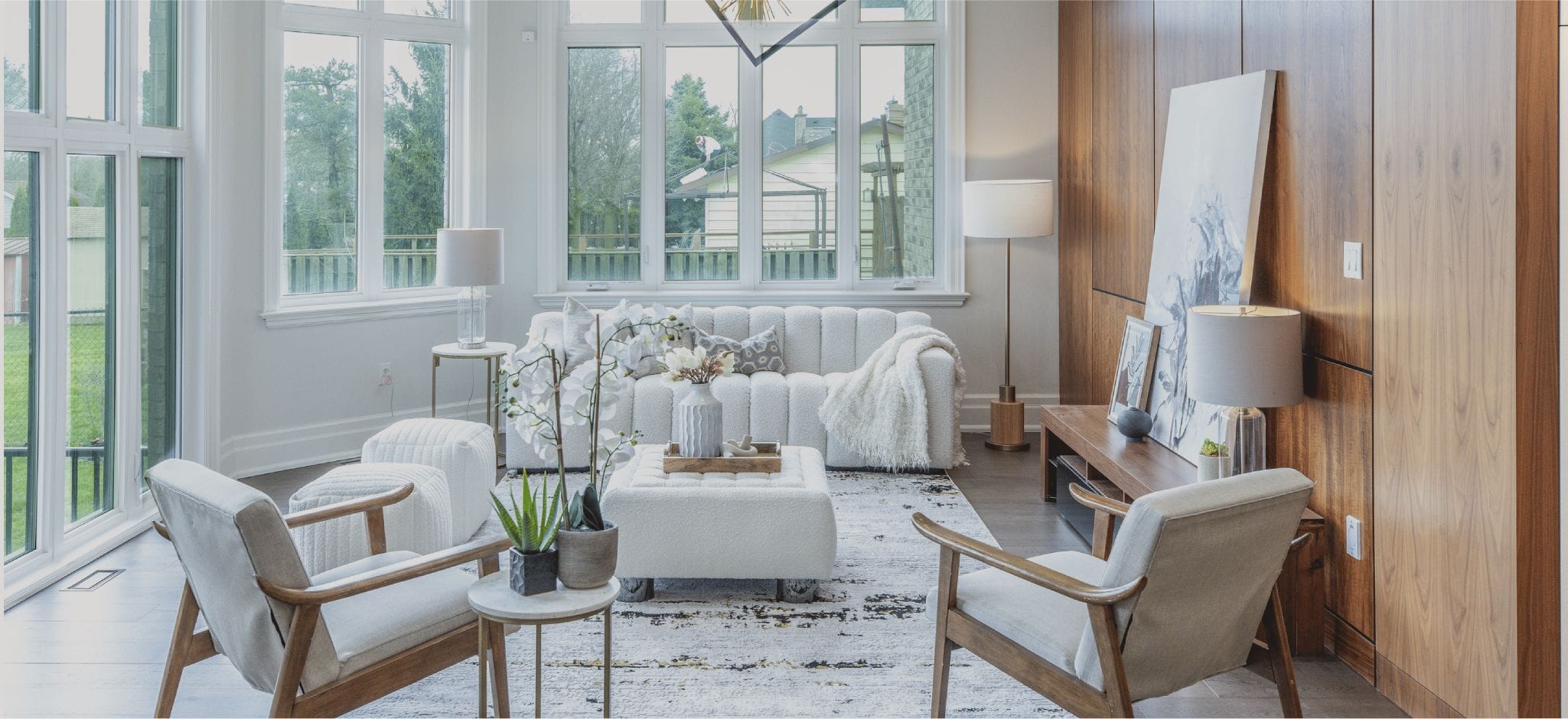
For most Toronto sellers, professional home staging is worth it in 2026, and the market data makes that clearer than it has been in years. With GTA homes averaging 47 days on market, active listings near a 26-year high, and buyers actively negotiating discounts on under-presented properties, staging has become a financial decision with measurable stakes. At StyleBite Staging, we’ve transformed over 1,000 GTA properties through multiple market cycles, and the conditions sellers are facing right now turn presentation differences directly into dollars at the offer table.
That said, staging is not the right call for every property or every situation. This guide breaks down the market data, the ROI evidence, Toronto-specific costs, and the specific conditions where professional staging pays, and where it genuinely doesn’t.
What the Toronto Market Actually Looks Like in 2026
To understand why staging decisions carry more weight now, it helps to look at where buyers and sellers actually stand.
According to TRREB’s March 2026 Market Watch, the GTA closed the quarter with 21,596 active listings, near the highest March inventory in roughly 26 years. The sales-to-new-listings ratio sat at 34.9%, well below CREA’s 45-65% balanced market threshold, confirming buyer-favourable conditions across all major segments.
| Market Indicator | March 2026 | March 2025 |
|---|---|---|
| GTA Average Sale Price | $1,017,796 | ~$1,090,000 |
| Average Days on Market | 47 | 36 |
| Active Listings | 21,596 | ~16,800 |
| Sales-to-New-Listings Ratio | 34.9% | ~47% |
| Sale-to-List Price Ratio | 98% | 100% |
Source: Toronto Regional Real Estate Board (TRREB), March 2026 Market Watch
The segment-by-segment picture is worse in places: condo apartments are down 9.0% year-over-year, semi-detached homes down 9.3%, and detached homes down 6.7%. The Bank of Canada held its policy rate at 2.25% in March 2026, producing five-year fixed mortgages around 3.69%, modestly supportive but not enough to generate bidding wars.
What this means practically: buyers have options, time, and negotiating power, and they’re using all three. TRREB’s own data shows the average GTA home now sells 2% below asking, a gap buyers are actively engineering through discount requests on under-presented properties. That $20,000+ gap doesn’t exist on paper. It comes out of someone’s pocket.
What the ROI Data Actually Says
The most rigorous recent data on staging ROI comes from NAR’s 2025 Profile of Home Staging (1,266 Realtor responses, ±2.75% margin of error). It’s US data, but it’s the most methodologically sound benchmark available and is widely referenced by Canadian real estate professionals.
| Finding | NAR 2025 Data |
|---|---|
| Agents reporting a 1-10% price increase from staging | 29% |
| Buyer’s agents reporting a 1-5% price increase | 17% |
| Buyer’s agents reporting a 6-10% price increase | ~10% |
| Seller’s agents who said staging reduced time on market | 49% |
| Buyer’s agents who said staging helped buyers visualize the home | 83% |
| Seller’s agents who stage every listing | 21% (down from 38% in 2017) |
Source: National Association of Realtors, 2025 Profile of Home Staging
On a GTA detached home at the current average of $1,342,375, a 1-5% staging-attributable premium translates to $13,400 to $67,100 in additional sale proceeds, several times the cost of a typical staging engagement.
The Real Estate Staging Association (RESA) reports more dramatic figures from their 2025 data: Q2 showed a 109% average sale-to-list ratio and a 4,415% ROI on an average $4,387 investment. These numbers carry significant self-reporting bias, since stagers submit their best projects rather than their average ones. NAR’s more conservative 1-10% premium is the more defensible planning benchmark.
Buyers extract a concrete discount from under-presented listings, and sellers in this market are accepting it.
What Home Staging Costs in Toronto in 2026
Toronto pricing runs higher than the US median because the market norm involves multi-month furniture rental on larger, higher-value homes. The 47-day average DOM also means three-month staging exposure is now the realistic planning assumption, not an edge case. At renewal rates of $500-$600 per room, a three-month engagement on a mid-sized home adds up quickly.
| Service | Typical Toronto Range |
|---|---|
| Staging consultation | $150-$600 |
| Occupied staging (full service) | $650-$3,500 (first month) |
| Vacant condo or small home | $2,000-$6,000 (first month) |
| Vacant detached home | $4,000-$10,000+ (first month) |
| Very large or luxury vacant staging | $10,000-$15,000+ |
| Monthly renewal after first month | $500-$600 per room |
Source: RE/MAX Canada
At StyleBite, we own our entire furniture and accessory inventory rather than renting from third parties, which means we’re not passing on third-party rental markups. Every quote is based on the specific property after an initial consultation.
The initial staging fee is only part of the cost picture. With current sale timelines, most sellers should plan for at least two to three months of rental coverage. That’s not a reason to skip staging. It’s a reason to factor it into the math from the start.
Which Properties Benefit Most from Staging Right Now
Not every property type benefits equally. Here’s where staging consistently delivers the strongest return.
Vacant Homes
Vacant homes are the clearest case. Empty rooms force buyers to guess at scale, traffic flow, and furniture fit, and that cognitive work translates directly into lower offers or skipped showings. NAR’s research found that 83% of buyer’s agents report staging helps buyers picture a home as their own.
We’ve seen this play out directly in our work. A vacant five-bedroom home at 1443 Bunsden Avenue in Mississauga was listed at $2,950,000 and sold at $2,935,000 in five days after staging, achieving a 99.5% sale-to-list ratio with a 5-day DOM, both significantly better than the GTA’s current 98% and 47-day benchmarks.
The condo market tells a similar story, though the pressure comes from a different direction.
Condos
Condo apartments are down 9.0% year-over-year in the GTA, and new condo sales hit their lowest level since 1991 in 2025. When several comparable units in the same building are competing for the same pool of buyers, the staged unit consistently wins showings. Our Toronto condo staging service uses inventory specifically scaled for condo dimensions: standard house furniture can overwhelm a 650 sq ft unit and work against the sale rather than for it.
Agent Christina Gerodimou came to us with a condo that had sat on the market for eight months with zero offers. After staging, it sold in one week.
For detached and semi-detached properties, the case for staging comes down to straightforward arithmetic.
Mid-Market Detached Homes ($800K-$2.5M)
The math is strongest in this price range. A 2-5% staging premium on a $1.5M home produces $30,000-$75,000 in additional proceeds, an order of magnitude above staging cost. Semi-detached and freehold townhouse segments, both down more than 6% year-over-year, face similar competitive dynamics.
When Staging Probably Isn’t Worth the Cost
The counter-case deserves equal treatment. Four situations argue genuinely against full professional staging:
- Tear-down and land-value properties. If the building is being priced for infill development, staging rooms a buyer plans to demolish adds nothing.
- Already photograph-ready occupied homes. If the property is well-decorated, properly scaled, and genuinely decluttered, a staging consultation (which applies toward staging fees if you proceed) typically delivers most of the benefit at a fraction of the cost.
- Entry-level condos under $500K. In heavily oversupplied buildings, the potential sale price premium may not justify two to three months of rental fees. A strong photography package may be the more defensible spend.
- Investor and estate listings with thin margins. When the carrying cost of staging fees creates more pressure than the potential uplift, virtual staging paired with high-quality photography can be a defensible alternative.
Staging performs best when buyers have choices and time to be selective, and that is precisely the market Toronto sellers are navigating in 2026.
The Limits of Virtual Staging
AI-driven virtual staging platforms now produce altered listing photos at a fraction of physical staging costs, with AI-powered tools pricing individual images in the cents-to-dollars range. According to NAR’s 2025 Technology Survey, 68% of real estate professionals had used AI tools in their business by mid-2025.
NAR’s 2025 data puts the limitation in concrete terms: 34% of seller’s agents rated virtual staging as less effective than physical staging. A property can look polished in photos and immediately disappoint buyers who arrive to an empty room. The buyer’s in-person experience still does the heavy lifting, and virtual staging does nothing for that.
Disclosure rules are also tightening. California’s AB 723 (effective January 2026) now requires disclosure of digitally altered real estate images, and several major MLS systems have adopted a “Virtually Staged” label requirement. Canada has no direct equivalent yet, but the direction is clear.
Virtual staging works well as a supplement for secondary rooms you choose not to physically stage. As a replacement for physical staging on primary spaces like the living room and primary bedroom, the ROI case doesn’t hold up against the current data.
What 2026 Staging Actually Looks Like Design-Wise
Design preferences have shifted considerably since the grey-and-white minimalism that dominated the past decade. Homes staged in that aesthetic now photograph as dated, a liability when buyers are comparing five listings in an afternoon.
The staging palette performing well in 2026 centres on:
- Warm beiges and caramel neutrals replacing cool greys
- Bold accent colours (electric blue kitchens, patterned upholstery)
- “Modern Heritage” combinations of classic architectural detail with contemporary furniture
- Sculptural and curved forms replacing angular minimalism
- Tactile textures: plaster finishes, cork, woven materials, natural wood
At StyleBite, we continuously cycle older inventory out and bring in fresh pieces that reflect what buyers are responding to. Staging with dated furniture is a genuine liability: buyers notice even when they can’t articulate exactly why a space feels off. Browse our portfolio to see what current staging actually looks like.
Frequently Asked Questions About Home Staging in Toronto
Here are the questions we hear most often from Toronto sellers and their agents.
How Much Does Home Staging Cost in Toronto in 2026?
Occupied home staging typically runs $650-$3,500 for the initial setup. Vacant staging ranges from around $2,000 for smaller condos to $4,000-$10,000+ for larger detached homes. Because current DOM averages 47 days and many properties require a price adjustment before selling, plan realistically for two to three months of staging duration rather than one. Contact us for a quote tailored to your specific property.
Does Home Staging Work in a Buyer’s Market?
Staging is more valuable in a buyer’s market than in a seller’s market. When buyers have 21,596 active listings to choose from, the properties that generate offers are the ones that look objectively better than the alternatives. NAR’s data shows 49% of seller’s agents report staging reduced time on market for their listings, and in a market where every extra week costs carrying costs and negotiating ground, that timeline impact matters.
How Long Does Home Staging Take?
A staging installation for a typical Toronto property takes one day. Consultations run 1-2 hours. The more relevant question is how long the staging needs to remain in place, and given current market conditions, that’s usually 2-3 months, which should factor into the total cost calculation.
Is Occupied Staging Worth It If My Home Is Already Furnished?
If the property is genuinely well-furnished, decluttered, and properly scaled, a staging consultation is often the better investment. A consultation gives you a specific action list covering furniture placement adjustments, decluttering priorities, and accessory updates, at a fraction of full staging cost. If the consultation reveals more significant gaps, that’s the moment to consider fuller service.
Can a Condo Be Staged If It Has a Small Floor Plan?
Yes, and the key is working with a stager who has right-scaled inventory. Standard furniture from a house can overwhelm a 600-700 sq ft condo and make the space feel cramped rather than usable. The goal in condo staging is to help buyers see the unit as livable and well-proportioned, which requires pieces actually dimensioned for that environment.
What Is the StyleBite 30-Day Sold Guarantee?
StyleBite offers a 30-Day Sold Guarantee: if your staged property doesn’t sell within 30 days, you receive two additional months of staging at no extra charge. It’s a reflection of our confidence in the work and a meaningful risk-reducer for sellers in a market where timelines are genuinely uncertain.
Ready to Stage Your Toronto Property?
If you’re preparing a GTA property for sale and want an honest assessment of whether staging makes sense, and what it would cost, get in touch with our team. We’ll assess the property, the price point, and the local competition to give you a clear picture before you commit.
Whether it makes sense comes down to your property and what you’re up against. That’s worth knowing before you list.