

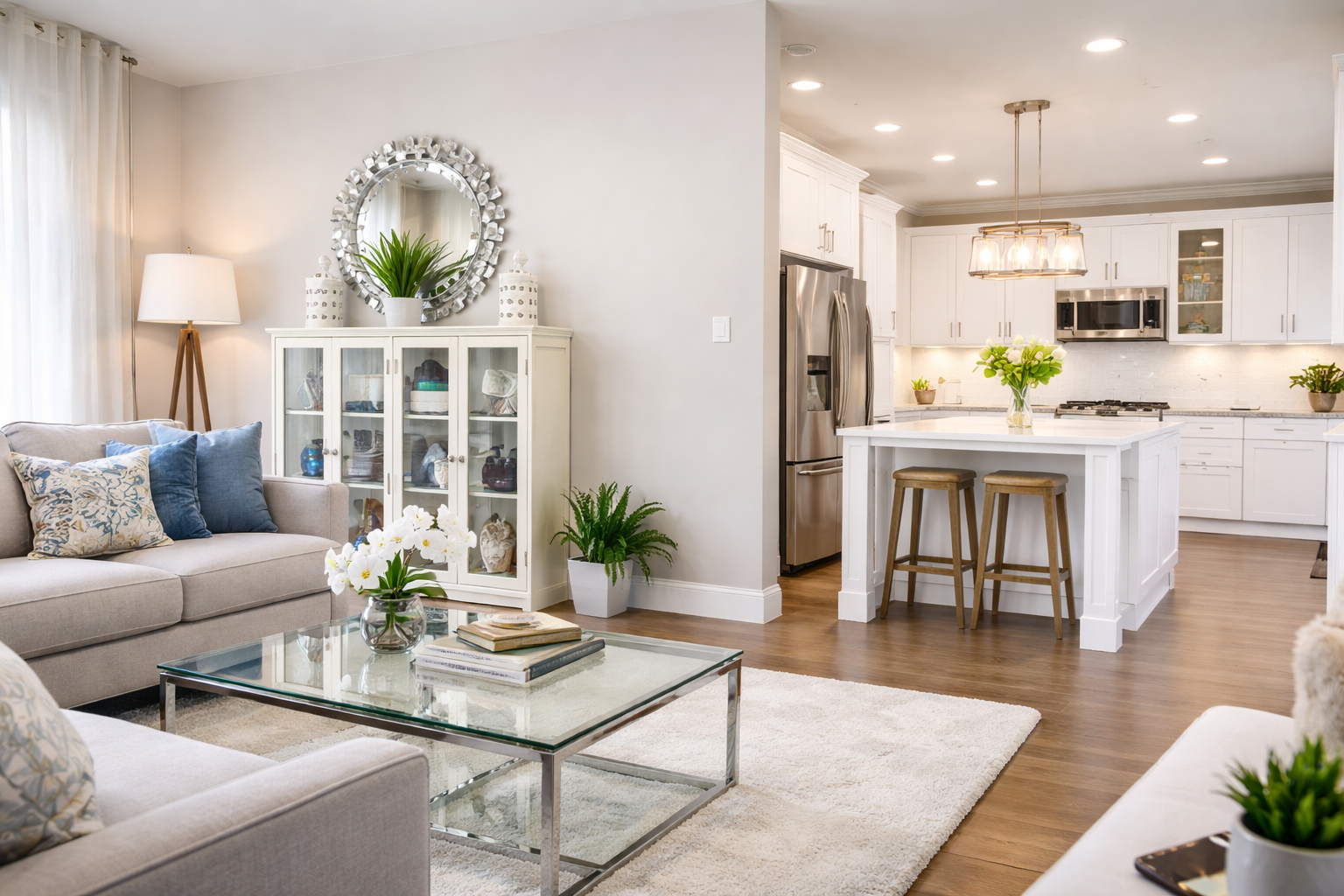
In Toronto’s current buyer’s market, where homes are sitting an average of 67 days and selling 3% below asking, that difference is significant. The steps that make the biggest impact are decluttering, depersonalizing, staging the three most buyer-sensitive rooms (living room, primary bedroom, and kitchen), and following up with professional photography before listing. At StyleBite Staging, we’ve helped stage over 1,000 homes across the Greater Toronto Area, from downtown condos to GTA luxury properties. The patterns are consistent: homes that are presented well attract more showings, generate stronger offers, and spend far less time on the market.
Why staging matters more right now in Toronto
The GTA housing market has shifted firmly in favour of buyers. As of January 2026, the sales-to-new-listings ratio sits at 28.6%, well below the 40% threshold that defines a buyer’s market. Active inventory stands at 17,975 listings. Homes are taking longer to sell across every property type.
Property Type | Avg. GTA Price (Jan 2026) | Year-over-Year Change |
Detached | $1,277,915 | -7.2% |
Semi-detached | $945,967 | -9.7% |
Freehold townhouse | $914,738 | -7.0% |
Condo apartment | $604,759 | -9.8% |
What does staging a house actually involve?
Home staging is the process of preparing a property for sale by making it visually appealing to the widest range of buyers. It can involve:
- Decluttering and removing personal items
- Rearranging or replacing furniture to improve flow and scale
- Adding curated artwork, accessories and furnishings
- Addressing lighting, colour, and curb appeal
- Defining the purpose of ambiguous rooms
The goal is not to reflect the seller’s taste. It’s to create a space where buyers can picture themselves living.
The financial case for staging in Toronto
The numbers are clear. Here’s what the research shows: Sale price impact. The NAR 2025 Profile of Home Staging found that 29% of sellers’ agents reported staging led to a 1–10% increase in offers. On a $1,000,000 Toronto home, a 5% lift equals $50,000. Speed of sale. Nearly half (49%) of sellers’ agents in the same survey observed that staged homes sold faster. The Real Estate Staging Association (RESA) tracked staged homes across North America in 2025 and found an average of just 9 to 19 days on market per quarter. ROI. RESA’s Q1 2025 data showed sellers earned an average return of $23.34 for every $1 invested in staging. A $3,588 staging investment returned an average of $56,000 above list price in that sample. Carrying costs make speed essential. A Toronto homeowner carrying a $1,000,000 property faces roughly $6,200 per month in mortgage payments, property tax, insurance, and maintenance. Every extra month on the market erodes net proceeds. Staging that reduces time on market by four weeks can offset its own cost before any price premium is factored in.
Which rooms should you stage first?
You don’t need to stage every room. Focus your budget on the spaces buyers care about most. According to NAR’s 2025 research, here’s how buyers and their agents rank the importance of each room:
Room | Buyer Priority | How Often Agents Stage It |
Living room | Highest (37%) | 91% |
Primary bedroom | Second (34%) | 83% |
Kitchen | Third (23%) | 68% |
Dining room | Supporting | 69% |
Guest bedroom | Lowest (7%) | 22% |
How to stage each room
Living room
The living room is where buyers form their first interior impression. Clear out anything that makes the space feel crowded or personal. Arrange seating to create a natural conversation area and to highlight architectural features like a fireplace or large windows. Add a neutral area rug to anchor the room, and replace mismatched throw pillows with a cohesive set in one colour palette. Remove family photos and personal collections entirely. Buyers need to imagine themselves in the space, not feel like guests in yours.
Primary bedroom
The primary bedroom sells the lifestyle of the home. Use clean, hotel-quality bedding in neutral tones. Remove unnecessary furniture to make the room feel spacious. Nightstands should be styled with a lamp and one or two minimal accessories, nothing more. Clear surfaces and good lighting are the two biggest factors here.
Kitchen
Countertops should be nearly empty. Remove small appliances, personal magnets from the fridge, and any clutter near the sink. A bowl of fruit or a small plant near the window is enough to make the space feel warm without distracting from the finishes. If the kitchen has dated hardware, replacing cabinet pulls is a low-cost update that has a disproportionate visual impact.
Dining room
Set the table simply, with four to six place settings. The goal is to help buyers imagine hosting, not to show off dishware. Remove any office equipment, toys, or extra furniture that has crept into the dining area over time.
Entry and hallway
First impressions begin at the front door. A clean, uncluttered entry with a mirror, a simple piece of art, or a single piece of furniture sets a positive tone for the rest of the showing. Outdoors, make sure the front of the property is clean, landscaped, and welcoming.
Occupied vs. vacant staging: which do you need?
The approach depends on whether you’re still living in the home. Occupied staging works with your existing furniture, supplemented by rented accessories and select furniture pieces. A stager advises what to remove, reorganizes what remains, and layers in curated items to elevate the overall look. This is more affordable and entirely possible to maintain while living in the home. Vacant staging involves furnishing an empty property from scratch with rented furniture, art, and accessories. It costs more, but it’s close to essential for empty homes. Without furniture, rooms feel smaller than they are, architectural flaws become focal points, and buyers struggle to understand how the space would function. At StyleBite Staging, our occupied staging starts at $1,495 and our vacant staging starts at $2,000, with both including a one-month rental period. We also offer a staging consultation for sellers who want professional direction before handling the work themselves.
What does home staging cost in Toronto?
Costs vary by service type and the size and condition of the property.
Service | Typical Toronto Cost Range |
Consultation (1-2 hours) | $200–$600 |
Occupied staging | $1,495–$3,495 |
Vacant staging (one-month rental) | $2,000–$5,800 |
Condo staging | Starting at $2,000 |
Don’t stage without professional photography
Staging and photography are a package deal. A well-staged home photographed on a phone with poor lighting wastes the investment. Research compiled by Matterport found that listings with professional photos sell 32% faster and receive up to 118% more online views. Buyers spend 60% of their time on a listing looking at photos and only 20% reading the description. Stage first. Then schedule the photographer.
Common staging mistakes that cost sellers money
- Leaving a vacant home unstaged. Empty rooms feel smaller and harder to evaluate. Buyers lose interest quickly in unfurnished spaces.
- Keeping personal items on display. Family photos and collections prevent buyers from emotionally connecting with the space.
- Staging without photography. Strong staging and weak photos cancel each other out.
- Spreading budget evenly across all rooms. The living room and primary bedroom drive buyer perception. Prioritize accordingly.
- Waiting until after listing. Homes staged before going to market sell significantly faster than those staged after sitting for weeks. Once a listing develops a reputation for lingering, it’s difficult to recover.
Frequently asked questions about staging a home in Toronto
Is home staging worth it in a buyer’s market?
Yes, especially in a buyer’s market. When buyers have more inventory to compare against, presentation quality has a greater influence on whether they request a showing and what they’re willing to offer. The RESA 2025 data showed an average return of $23 for every $1 invested in staging, regardless of market conditions.
How long does home staging take?
A consultation typically takes 1 to 2 hours. Occupied and vacant staging installations are usually completed in a single day. The standard rental period for staged furniture is one month, which aligns with most Toronto listing timelines.
Should I stage a condo in Toronto?
Yes. Toronto’s condo market has been hit harder than any other segment, with prices down 9.8% year-over-year as of January 2026. Buyer expectations remain high, and right-scale furniture is particularly important in smaller units. Staging helps condos stand out in a segment with significant inventory and cautious buyers.
Can I stage my home myself?
Yes, with some preparation. The most impactful DIY steps are decluttering, depersonalizing, maximizing light, and making sure the home is deeply clean. A professional consultation is a cost-effective way to get expert direction before doing the work yourself. If the home is vacant, professional staging is typically worth the investment.
Ready to stage your Toronto home?
If you’re preparing to list in the GTA, we’re happy to walk you through the process. StyleBite Staging serves Toronto, Brampton, Markham, Mississauga, Richmond Hill, Oakville, and King City. We offer consultations, occupied staging, vacant staging, and condo staging, and we respond to all inquiries within one business day. Get in touch with StyleBite Staging or call us at 647-930-9600.